
A way to reach the mind through the body.
Yoga is not just a physical practice: it is a way to reach the mind through the body. For many people, sitting down to meditate can feel difficult or even out of reach. Moving through a sequence of poses with intention and presence, on the other hand, is a simple and powerful way to enter a state of calm and connection, without having to believe in anything in particular.
Within the yoga tradition, asanas (physical postures) play a fundamental role. They work not only on the muscles and organs but also on the energetic, mental and emotional levels. Each pose creates a specific alignment that supports inner balance, releases tension and awakens body awareness.
Designing the right practice is never generic or automatic. Only a trained teacher can adapt the poses to each person’s needs, abilities and stage of life. These adaptations reflect the true essence of yoga: union, understood as a personal process of transformation, balance and connection between body, mind and spirit.
Standing asanas are fundamental to yoga practice, as they help build strength, stability and balance from the very beginning. If you want to go deeper into this type of pose, we recommend our article dedicated entirely to standing yoga poses, where we explain each one in detail and how to practice it correctly.

Mountain pose. The foundation of every standing pose: it improves posture, balance and body awareness.

Swaying palm tree pose. A side stretch that lengthens the waist and keeps the spine flexible.

Standing spinal twist pose. A gentle twist that loosens the back and waist and relieves stiffness.

Right angle pose. Stretches the back, shoulders and hamstrings while strengthening the legs.

Double angle pose. Opens the chest and shoulders and helps counteract a rounded upper back.

Triangle pose. Stretches the sides of the body and the legs and strengthens the core.

Warrior I pose. Builds strength in the legs and opens the hips, chest and shoulders.
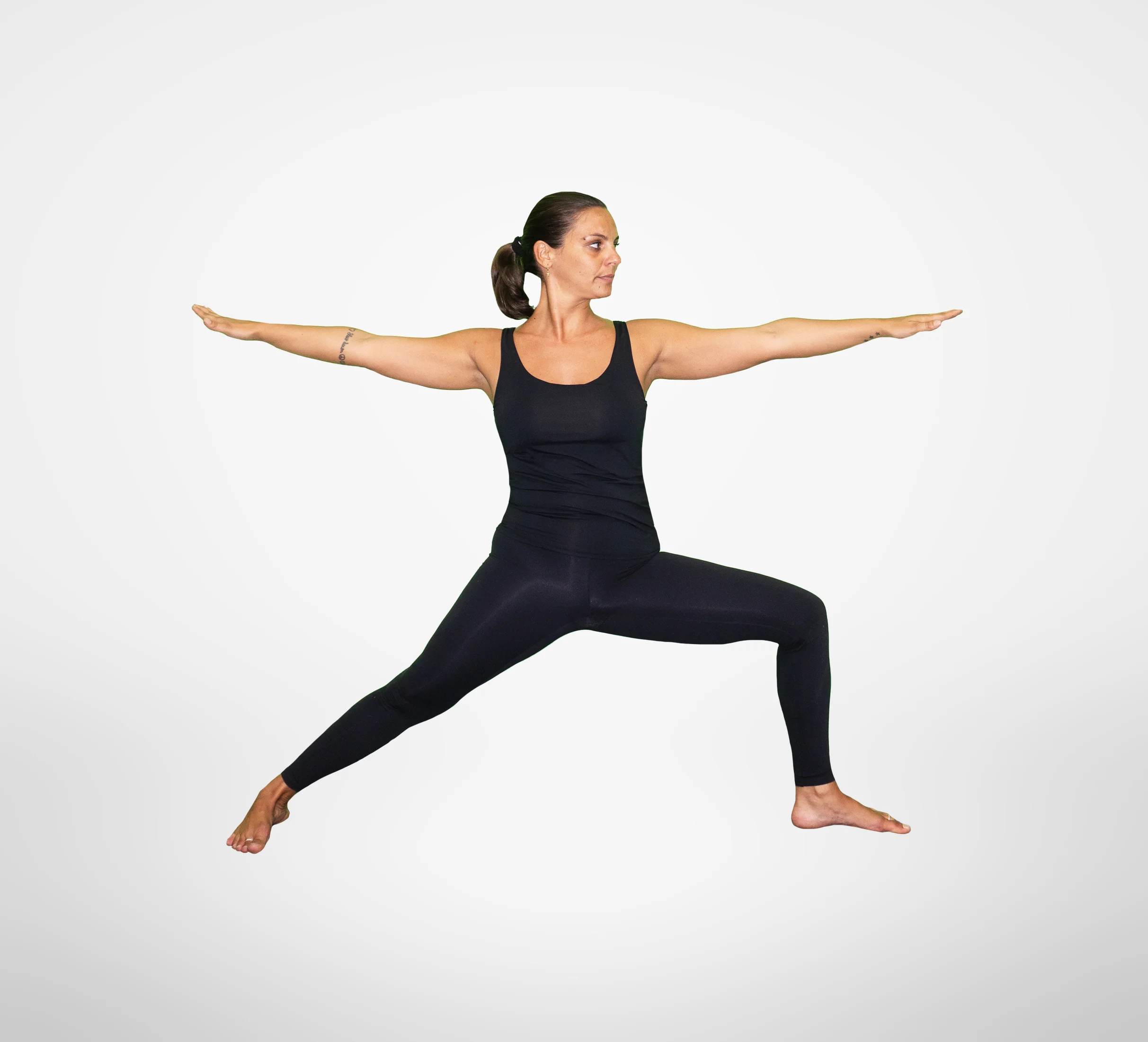
Warrior II pose. Develops leg strength, stamina and concentration.
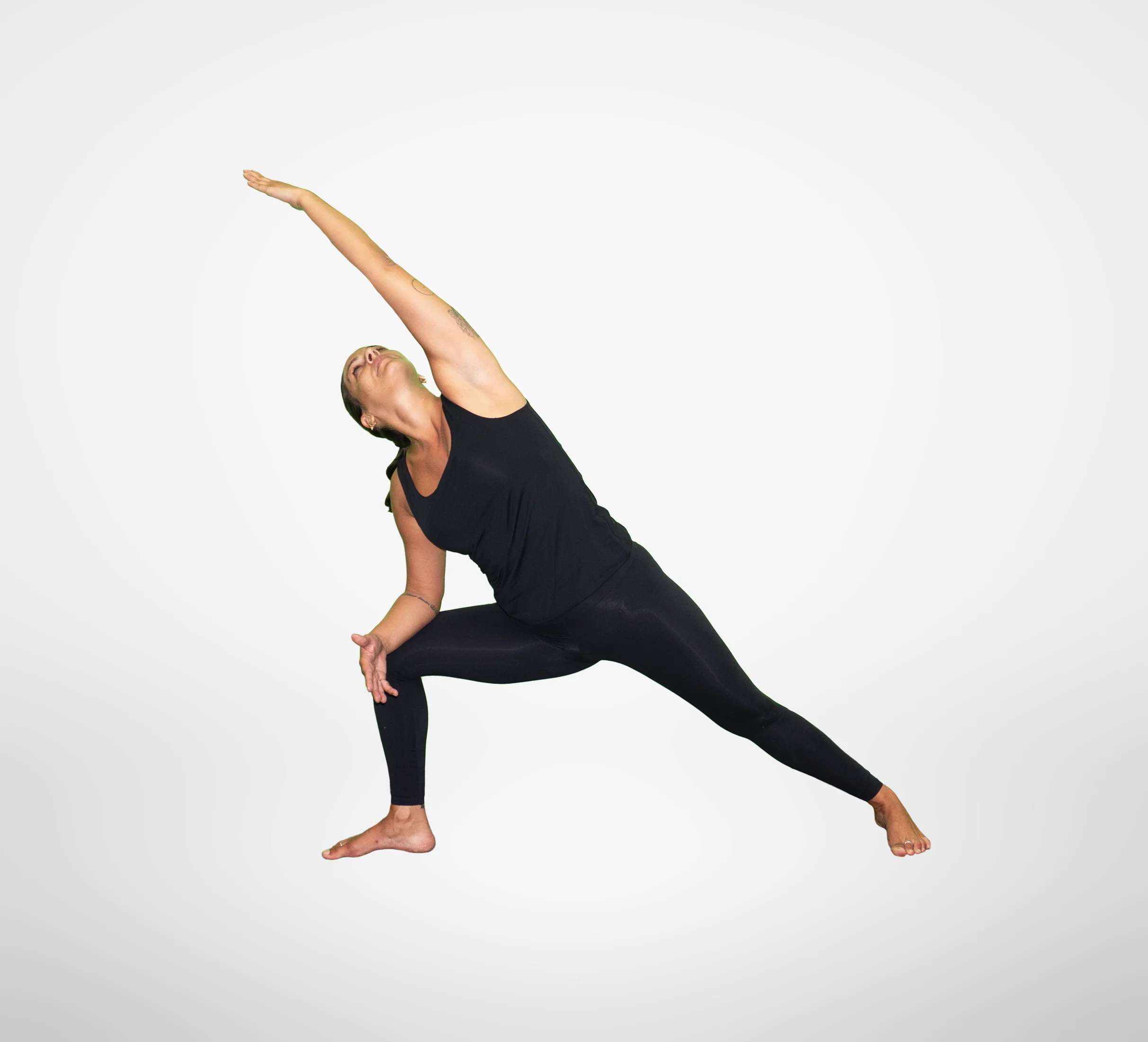
Side angle pose. Stretches the whole side of the body and strengthens the legs.

Chair pose. Strengthens the thighs, glutes and back and builds heat in the body.

Standing head-to-knee pose. A demanding balance that stretches the hamstrings and sharpens focus.

Hand-to-foot pose. A standing forward bend that stretches the whole back of the body.
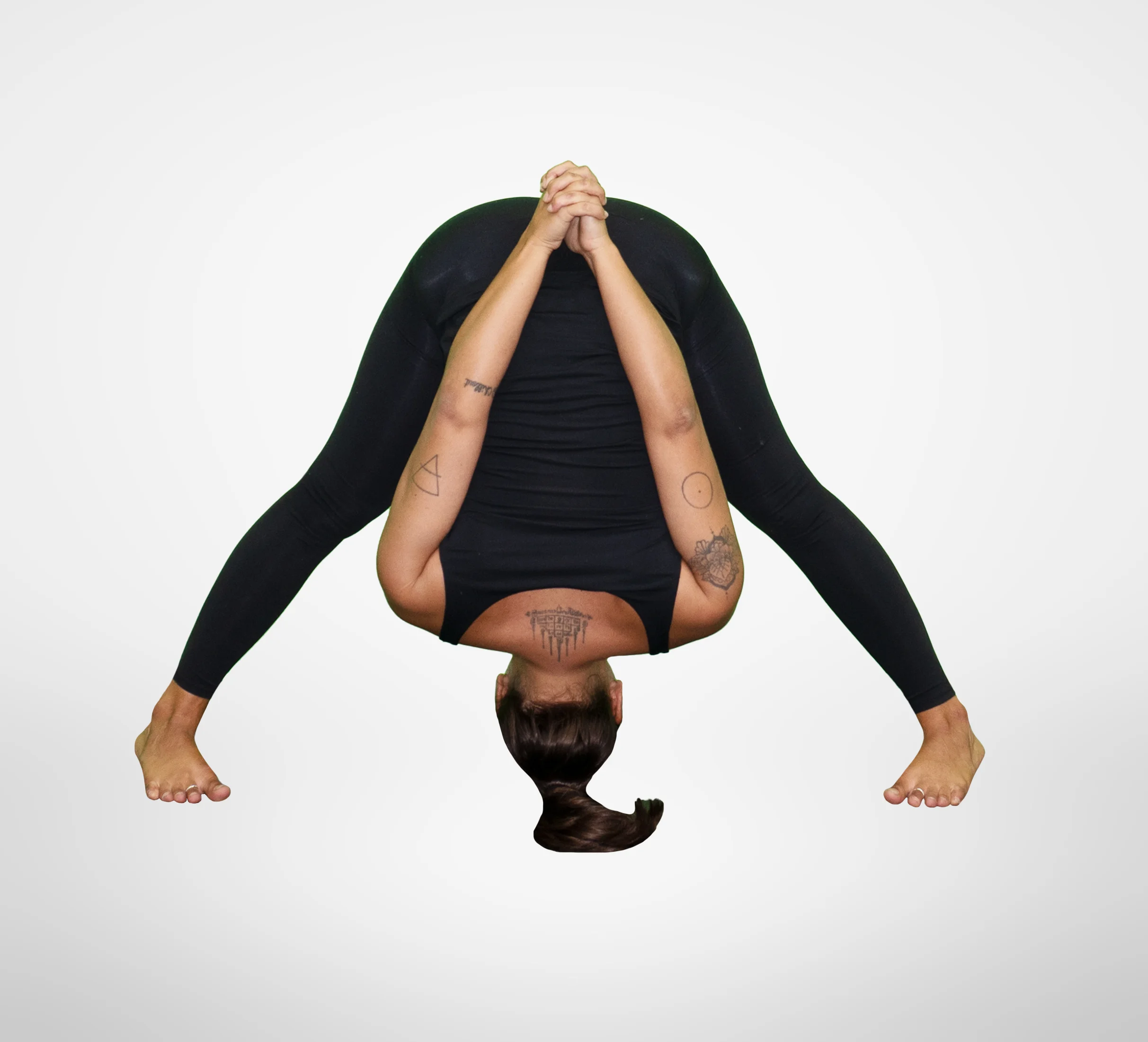
Crown pose. A forward bend that brings the crown of the head toward the floor and stretches the legs.

Seated forward bend. Stretches the spine and hamstrings and calms the nervous system.

Head-to-knee pose. Stretches one leg at a time and gently massages the abdominal organs.

Wide-legged seated forward bend. Opens the inner thighs and hips and lengthens the spine.

Wide-legged seated forward bend, deeper variation. Folding further increases the stretch in the back and legs.

Cobra pose. A gentle backbend that strengthens the back and opens the chest.

Bow pose. Stretches the whole front of the body and strengthens the back muscles.
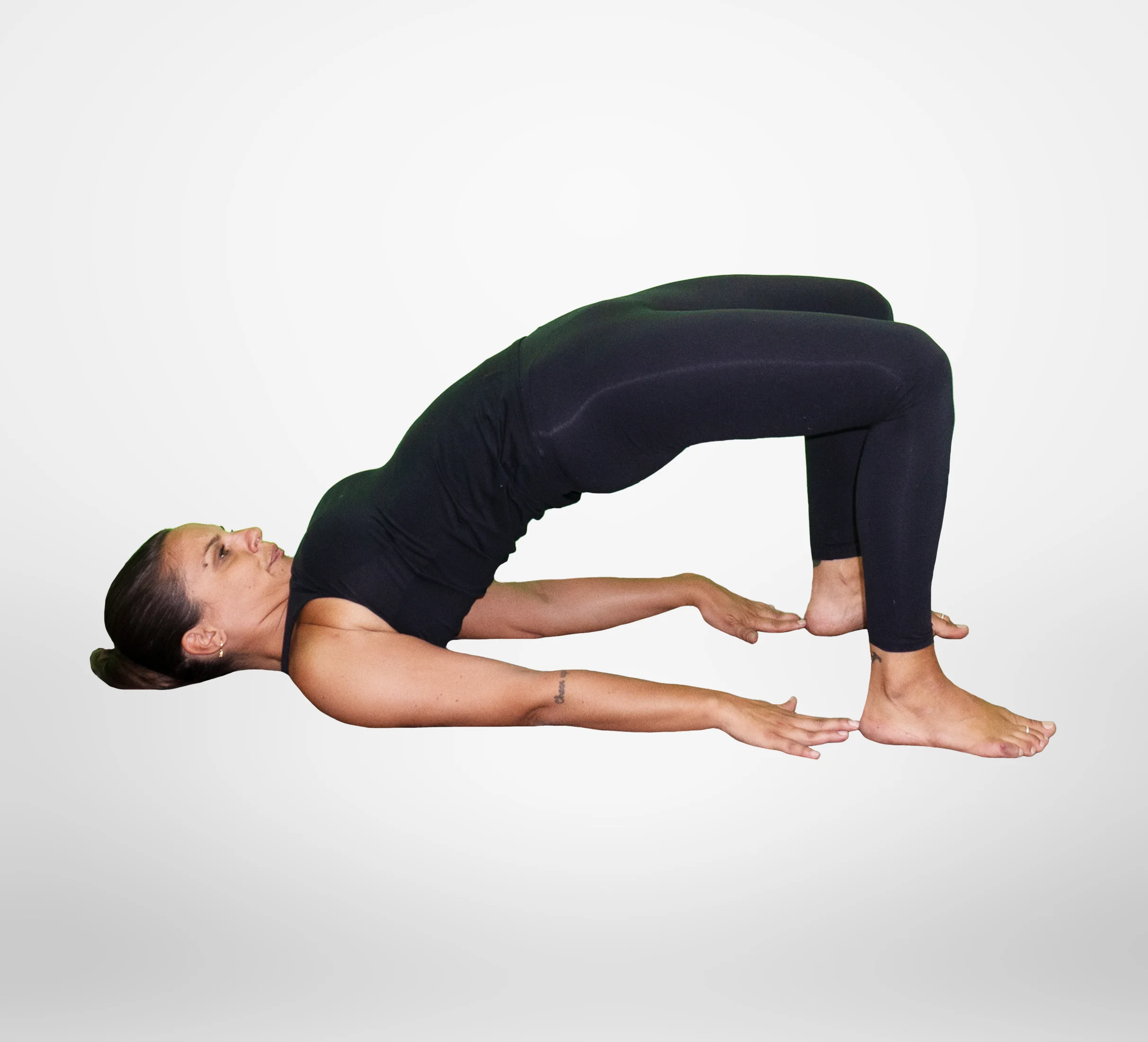
Half bridge pose. Strengthens the back, glutes and legs and opens the chest.

Wheel pose. A full backbend that calls for strength and flexibility in the back, arms and legs.
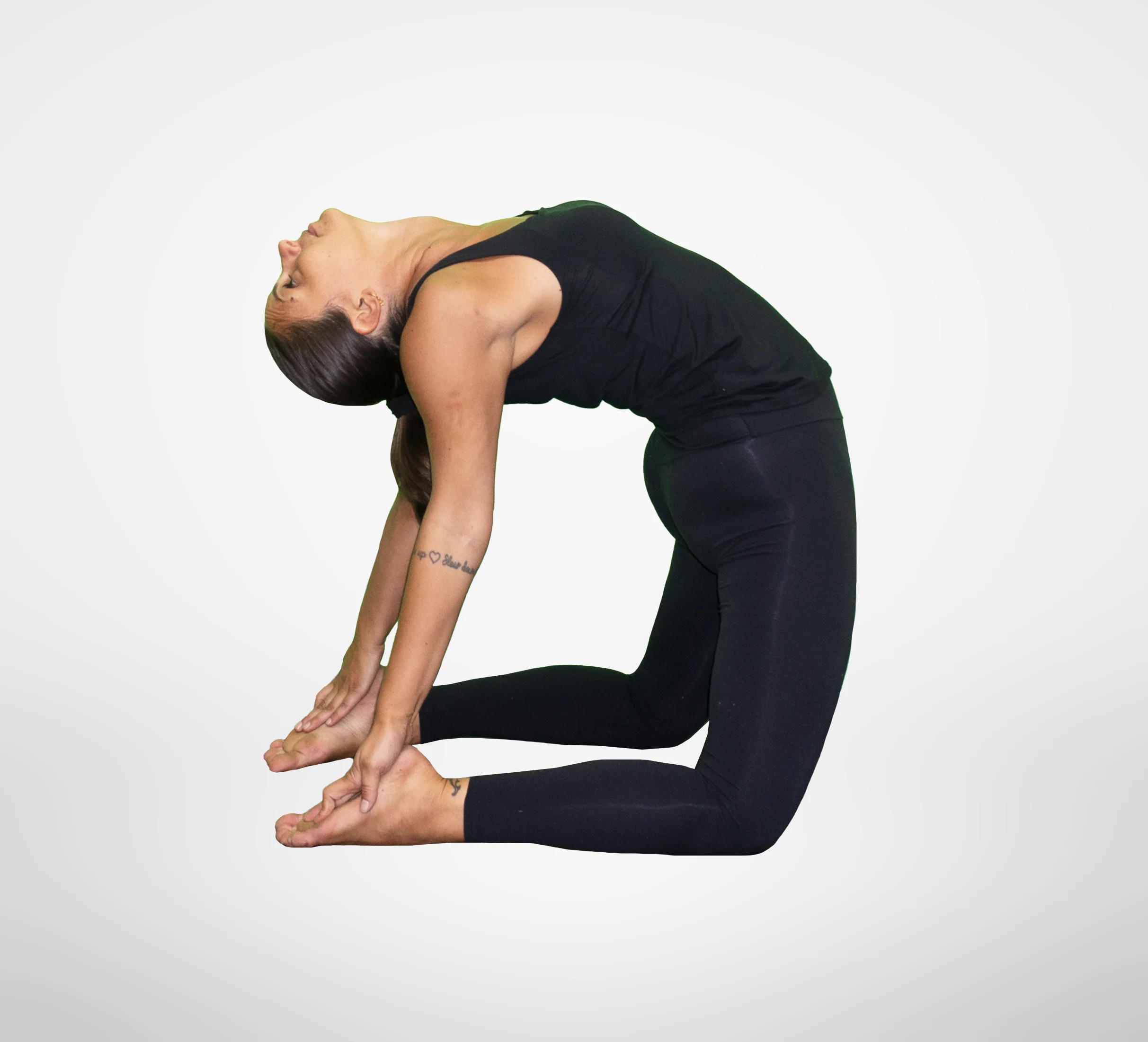
Camel pose. A kneeling backbend that opens the chest, shoulders and front of the body.

Fish pose. Opens the chest and throat and deepens the breath; often practiced after the shoulder stand.

Tiger pose. Mobilizes the spine and strengthens the back, glutes and core.

Extended puppy pose. Releases the shoulders and upper back and opens the heart area.
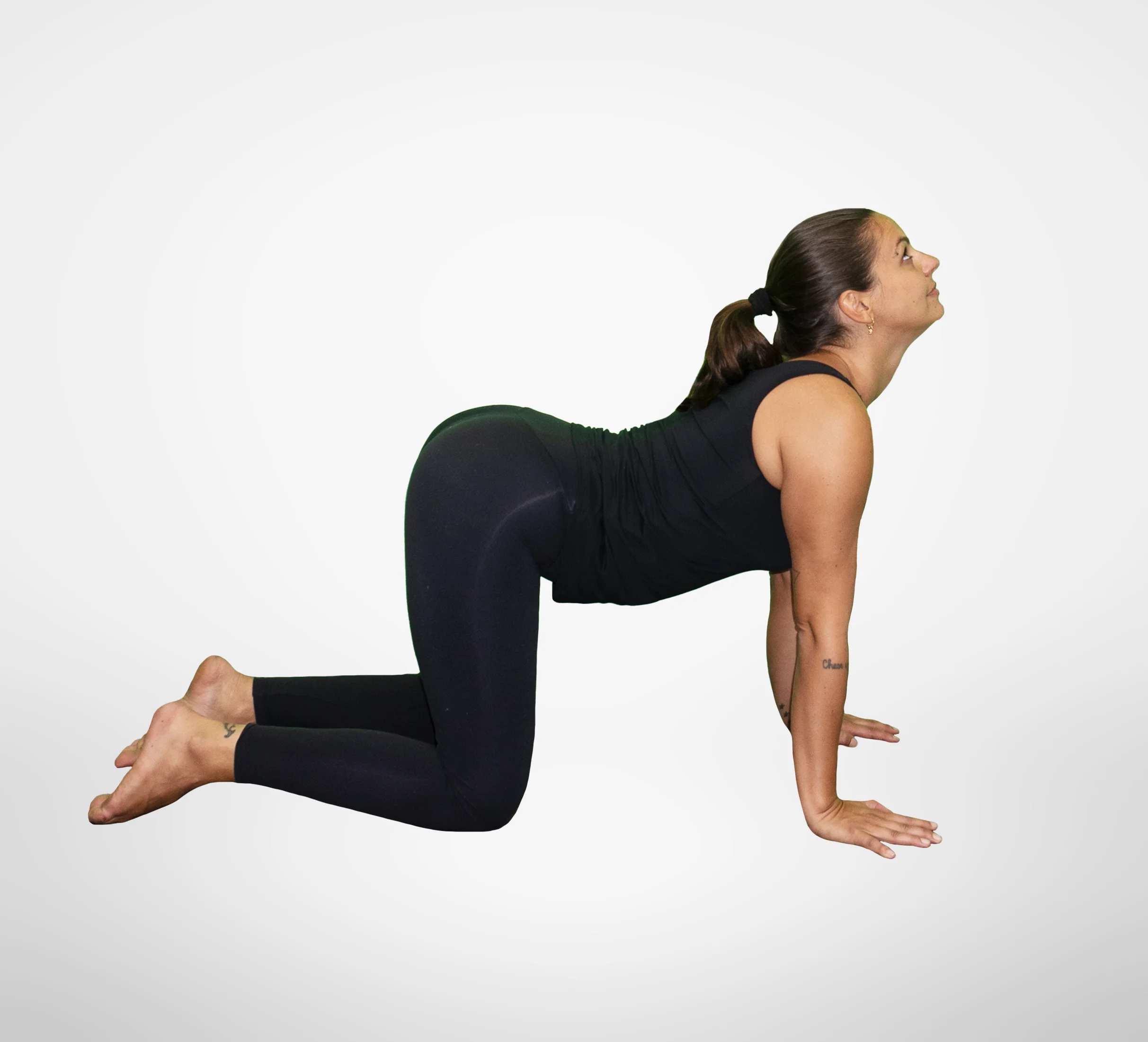
Cat pose. Mobilizes the whole spine in time with the breath.
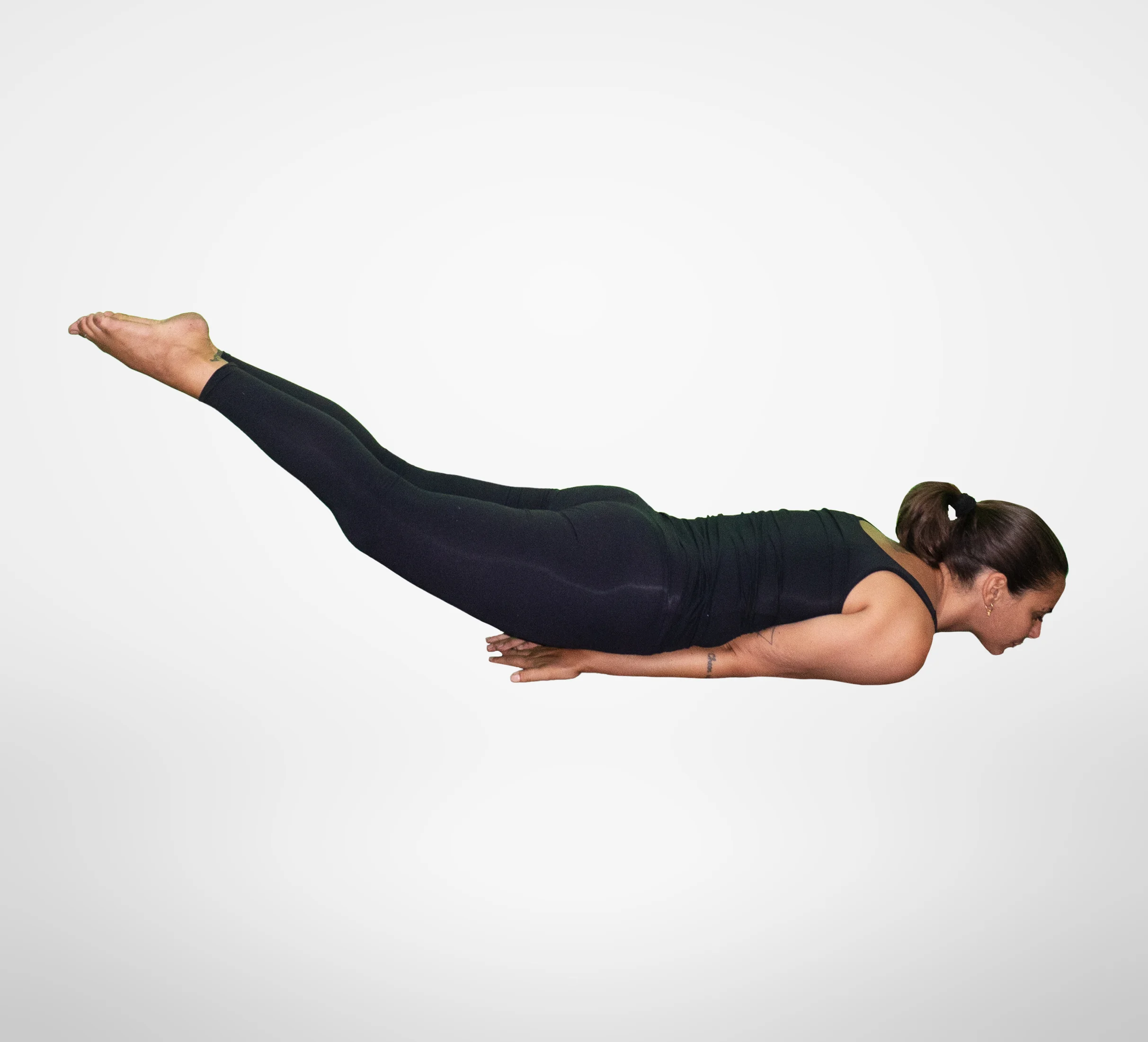
Locust pose. Strengthens the lower back, glutes and legs.

Half lord of the fishes pose. A seated twist that improves spinal mobility and aids digestion.

Revolved abdomen pose. A reclining twist that relaxes the back and massages the abdomen.

Earth salutation pose. A seated twist that brings the forehead toward the floor and stretches the spine.

One-legged prayer pose. Balancing on one leg with the hands at the chest builds stability and concentration.
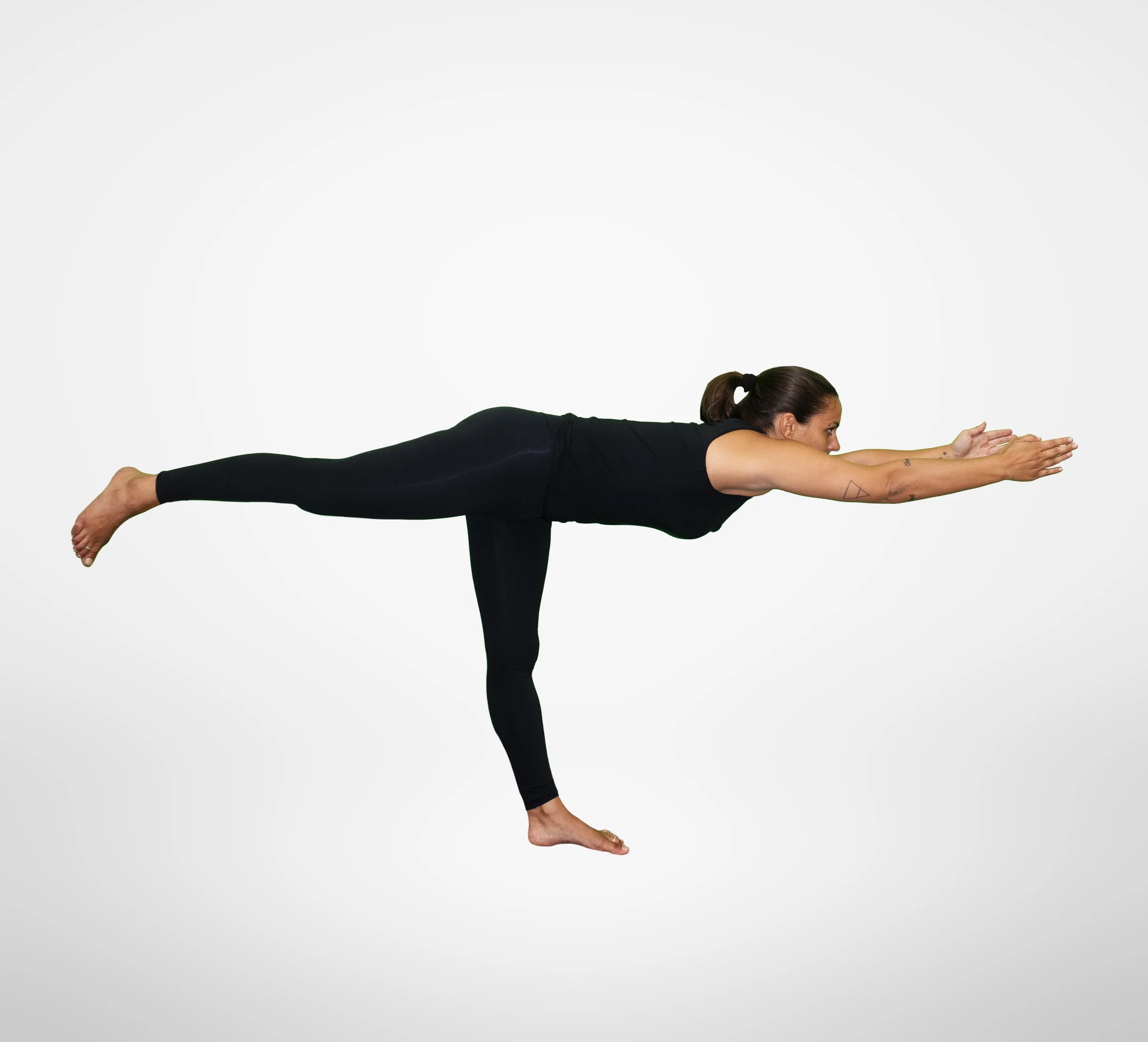
One-legged pose. Leaning forward on one leg strengthens the legs and challenges your balance.

Eagle pose. Wrapping the arms and legs improves balance, focus and joint mobility.

Dancer pose. Combines balance with a backbend that opens the chest and shoulders.

Crow pose. An arm balance that strengthens the wrists, arms and core.

Boat pose. Balancing on the sit bones strengthens the abdomen and hip flexors.
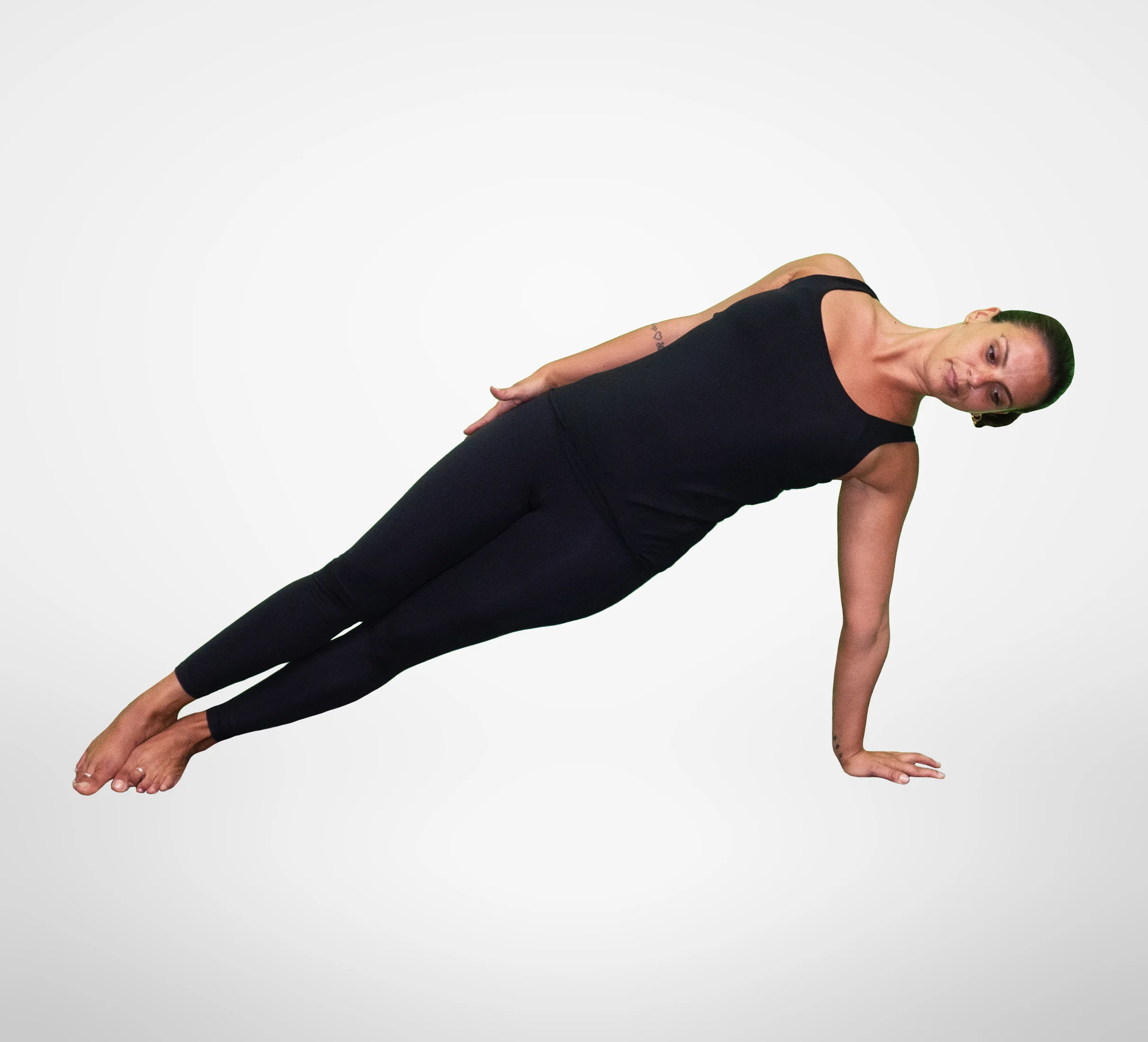
Plank pose. Strengthens the arms, shoulders and core and teaches you to keep the body aligned.

Balancing bear pose. Balancing on the sit bones with the legs open in a V strengthens the core and stretches the legs.

Half bound lotus forward bend. An advanced standing balance that opens the hips and stretches the legs.

Extended hand-to-big-toe pose. Balancing on one leg while holding the other foot stretches the hamstrings.

Downward-facing dog. Stretches the back of the body and strengthens the arms and shoulders.

Shoulder stand. An inversion that rests on the shoulders and calms the mind; best learned with a teacher.

Plough pose. Stretches the whole spine and the backs of the legs; it usually follows the shoulder stand.

Supported headstand. The forearms carry the weight while you build strength and focus. Learn it with a teacher.
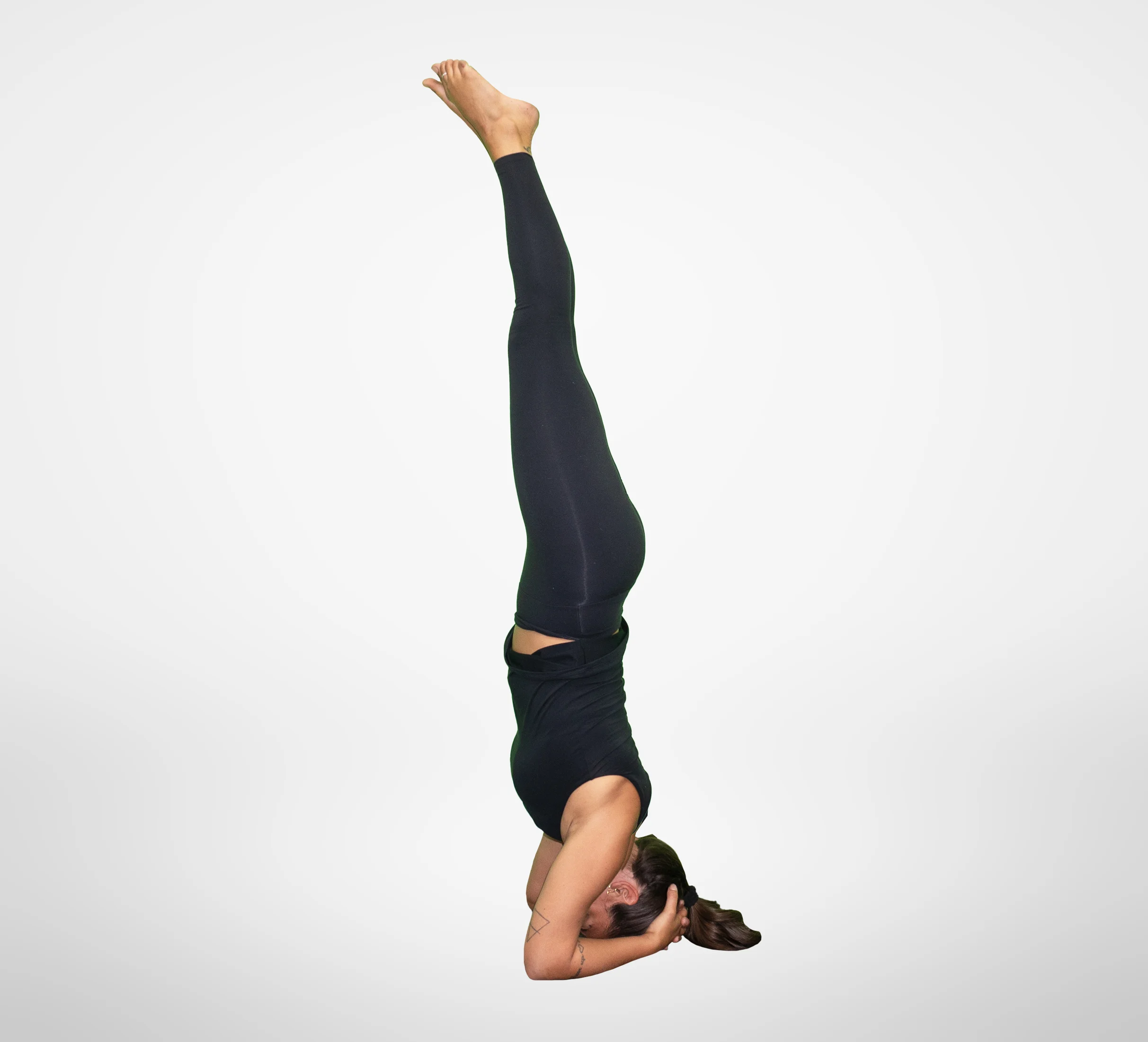
Headstand. Known as the king of asanas, it calls for strength, balance and good preparation.

Feathered peacock pose. A forearm balance that strengthens the shoulders, arms and core.
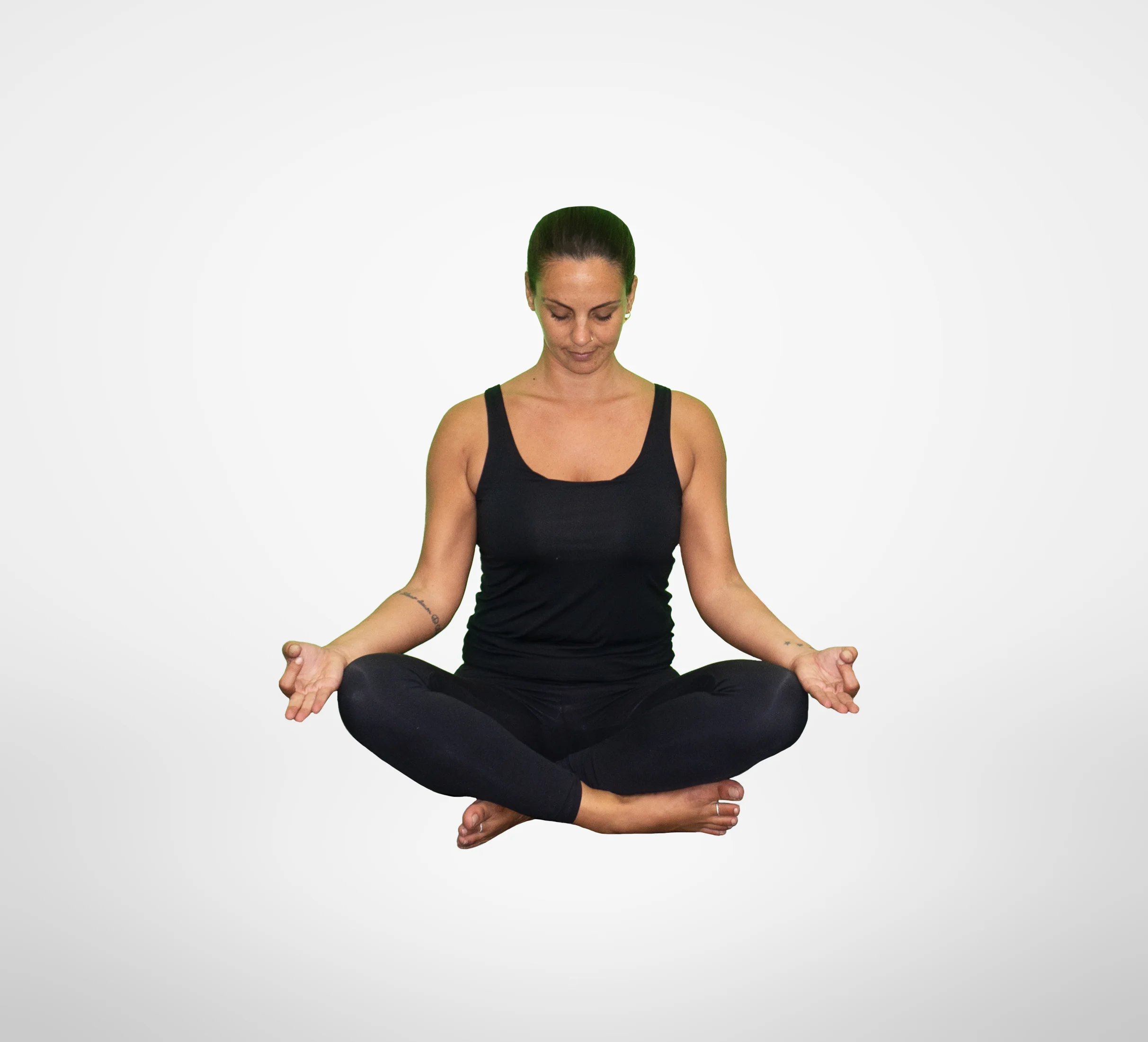
Easy pose. A simple cross-legged seat for meditation and breathing practice.

Auspicious pose. A cross-legged meditation seat with the feet tucked between thigh and calf.

Diamond pose. A kneeling seat that aids digestion and is comfortable for meditation.

Lotus pose. The classic meditation posture; it needs open hips and should never be forced.
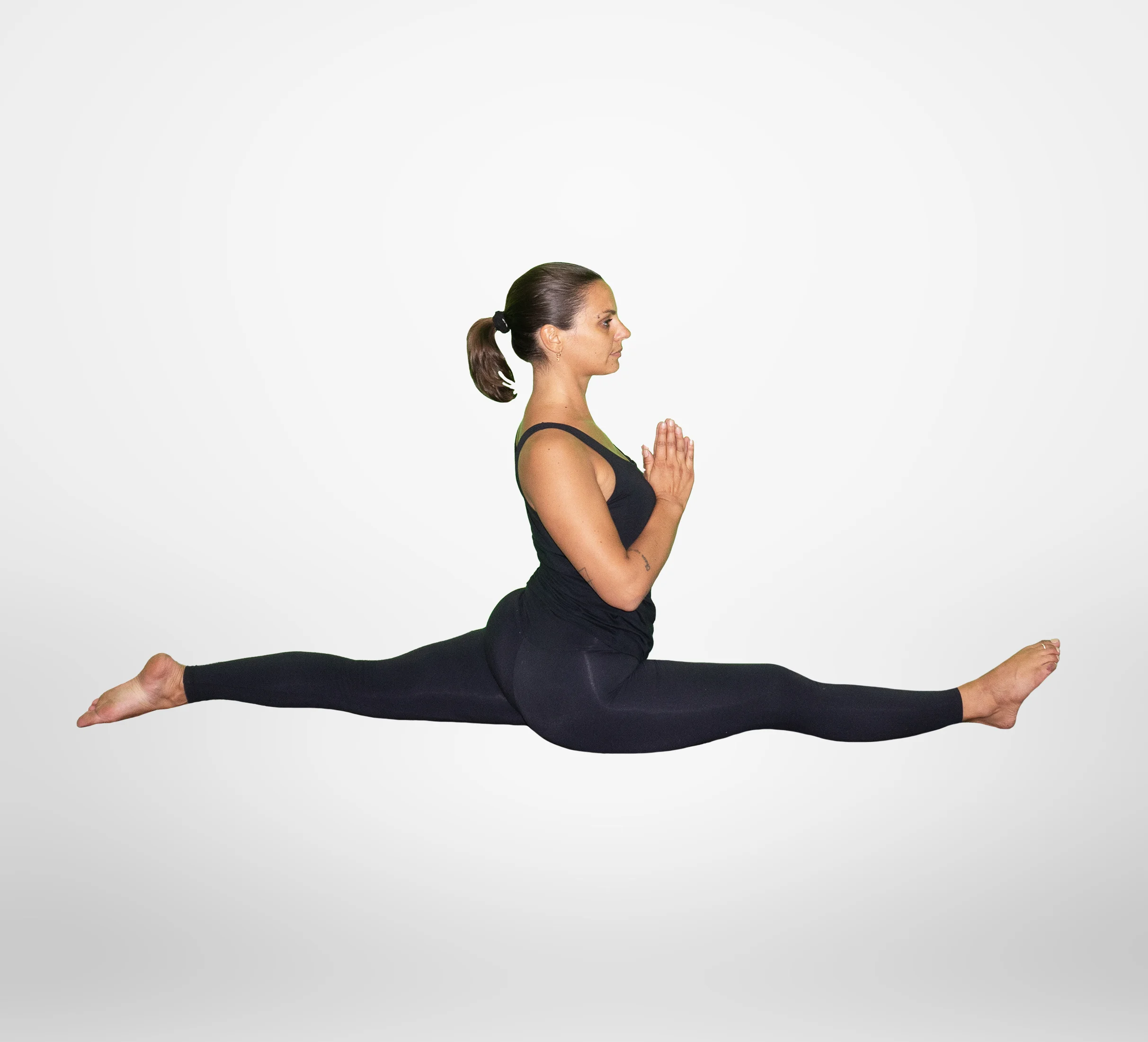
Monkey pose (full splits). A deep stretch for the hamstrings and hip flexors that takes patient practice.

Garland pose. A deep squat that opens the hips and relaxes the lower back.

Butterfly pose. Opens the hips and inner thighs from a comfortable seated position.

Corpse pose. Complete relaxation at the end of the practice to absorb its benefits.

Plank pose. Strengthens the arms, shoulders and core; a key pose in sun salutations.
- What asanas are for -
- Discover its true purpose -
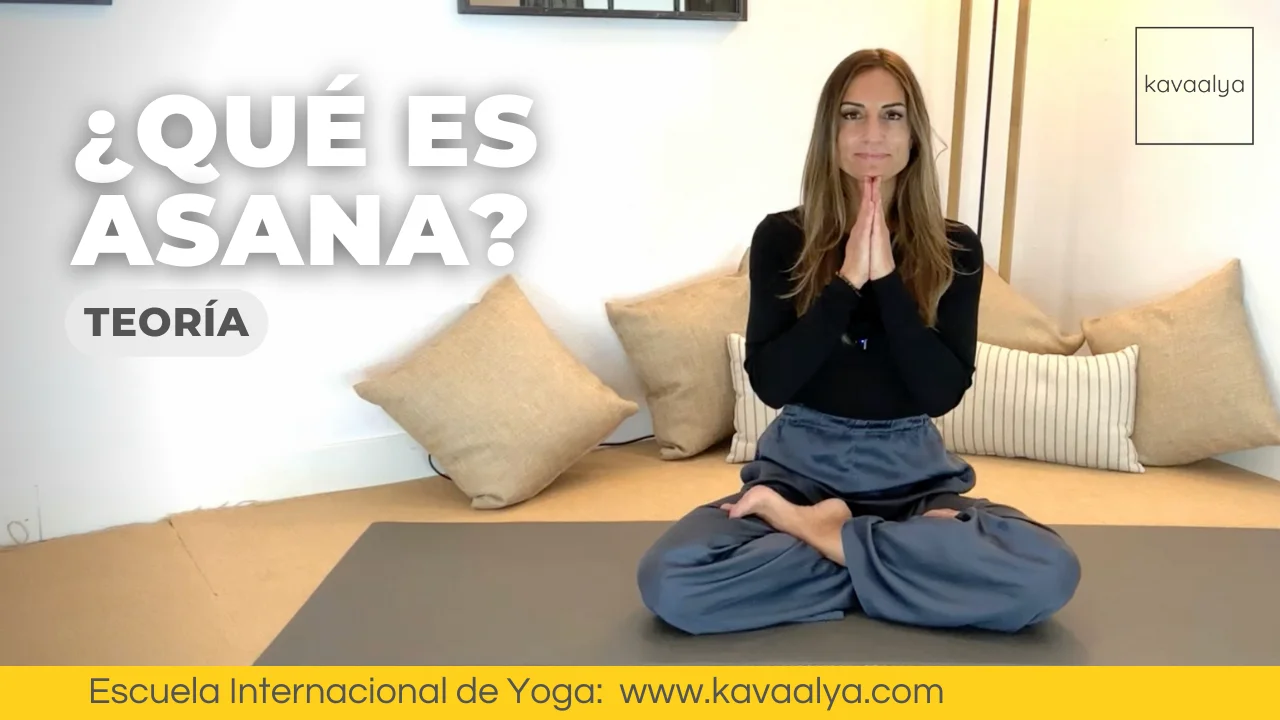
Prashant Pandey, teacher and program director at Kavaalya, talks about something very important that everyone should know before starting to practice yoga: the origin and true purpose of yoga. These are points worth keeping in mind at all times.
The video is recorded in Spanish. On YouTube you can listen to it in your language: open Settings (the gear icon) and choose Audio track.
- Asanas Playlist -
Asanas are poses that help prepare the physical body to rest in a state of stillness, meditating without discomfort or distraction. In this playlist we explain, step by step, how to do some of the most important yoga poses.
The videos are recorded in Spanish. On YouTube you can switch to the audio track in your language under Settings > Audio track.
- Discover the power of movement, calm and fun -
Yoga is a wonderful practice for children: it not only improves their flexibility and coordination, it also helps them calm down, focus and connect with their emotions. Through play and movement, little ones discover how to live in their bodies with joy, confidence and mindfulness.
In this section you will find yoga poses designed especially for kids: fun, safe and adapted to their pace. Each pose invites them to explore shapes, imitate animals or elements of nature and, above all, to enjoy the present moment. A beautiful way to plant the seeds of well-being from an early age!

Tree pose. Kids stand tall like a tree while practicing balance and concentration.

Downward-facing dog. Children imitate a stretching dog while stretching the whole body.

Cat-cow pose. Arching and rounding the back like a cat and a cow, in time with the breath.

Corpse pose. A quiet moment to relax at the end of the practice.
The ideal time to hold a yoga pose depends on the type of practice and your level of experience. In dynamic styles such as Vinyasa or Ashtanga, poses are usually held for 5 to 10 breaths. In gentler or restorative practices such as Yin Yoga, you can hold them for 3 to 5 minutes, or even longer if the goal is to release deep tension.
The most important thing is to listen to your body. If a pose feels stable and comfortable and you can breathe freely, you can stay a little longer. If discomfort or unnecessary tension starts to appear, it is time to let go. There is no exact time that works for everyone: every body has its own rhythm.
With time and practice, you will learn to recognize how long is enough for you. And remember, keeping the quality of your breath matters more than counting seconds. Yoga is not about enduring; it is about inhabiting the moment with awareness.
Good question! In theory, there are more than 84,000 yoga poses, a symbolic number that represents the vastness of this practice. In modern practice, however, around 200 main poses are taught, and 20 to 30 of them form the basis of most classes. Each one has many variations and levels, which allows the practice to adapt to every body and every moment.
You don’t need to learn them all to enjoy yoga. With a few well-learned poses, you can already build a complete and meaningful routine. The key is quality, not quantity. Learning little by little, with attention and respect for your limits, is worth more than trying to master them all.
Many poses also share similar foundations: what you learn in one carries over to many others. If you’d like to see how these poses are used in different practices, take a look at our article on the types of yoga. It will help you understand how each style combines and adapts the poses to its goals.
Yoga poses, called asanas, are not just physical movements: each one has a symbolic and energetic meaning. Some represent animals or elements of nature, such as Downward-Facing Dog or Tree, and invite us to connect with those qualities: stability, strength, flexibility or flow. Others have more spiritual roots and are designed to stimulate energy centers (chakras) or balance the emotions.
Each pose also has a purpose on the physical, mental and emotional levels. It isn’t just stretching: it is a form of self-exploration and inner connection. Through the body, yoga helps us work on patience, humility, confidence and concentration. What you experience on the mat is often reflected in your everyday life.
In short, the poses are like doorways to a deeper experience. It doesn’t matter whether a pose looks perfect; what matters is what it awakens in you. Yoga begins in the body, but it stays in the heart.
The hardest yoga pose varies from person to person, but one of the most challenging and best known is Sirsasana, or headstand. It requires not only core and shoulder strength but also balance, breath control and a good deal of mental calm. It isn’t just a physical matter: it also means overcoming the fear of falling and trusting yourself.
Other advanced poses, such as Mayurasana (peacock), Eka Pada Galavasana (flying crow) or Hanumanasana (full splits), are also considered difficult because of their physical and technical demands. But the truth is that the hardest pose is the one in which your mind wants to give up. Sometimes staying still in Savasana can be more challenging than an inversion.
There are no trophies in yoga for mastering complex poses. The bravest thing is to listen to your body and practice with humility and consistency. Everyone has their own Everest on the mat, and that is perfectly fine.
There are many yoga poses that are perfect for people taking their first steps in the practice. Some of the most recommended are child’s pose (Balasana), mountain pose (Tadasana), downward-facing dog (Adho Mukha Svanasana) and cat-cow (Marjaryasana-Bitilasana). These poses help wake up the body, improve breathing and develop body awareness without demanding too much.
When you’re starting out, it’s best to focus on simple but effective poses that let you build a solid foundation without forcing or comparing yourself. The goal isn’t to do them perfectly, but to understand how each one feels in your body. Practicing with respect and curiosity is key.
If you’d like a more complete guide with images and step-by-step explanations, read our article on yoga for beginners on the blog.