Standing yoga poses are an essential part of any practice, because they build the foundation that supports everything else: balance, strength and stability. They are also the backbone of Hatha and Ashtanga Vinyasa, the two styles on which Kavaalya’s training is built.
Beyond toning the legs and core, these standing asanas refine your posture, build flexibility and awaken body awareness. Practised as standing yoga exercises, with intention and breath, they gradually transform your physical and mental well-being.
When the body stays upright and aligned, standing yoga cultivates a sense of grounding and connection with your surroundings. Each pose offers something different: some boost circulation, others calm the nervous system or retrain alignment.
In this guide we go through ten of the most effective standing asanas, with step-by-step instructions and their benefits. Whether you are taking your first steps or have spent years on the mat, they will help you deepen your practice and build steadiness. And if you feel like practising with company, you can also explore partner yoga poses, ideal for confidence and coordination.
Tadasana (Mountain Pose)
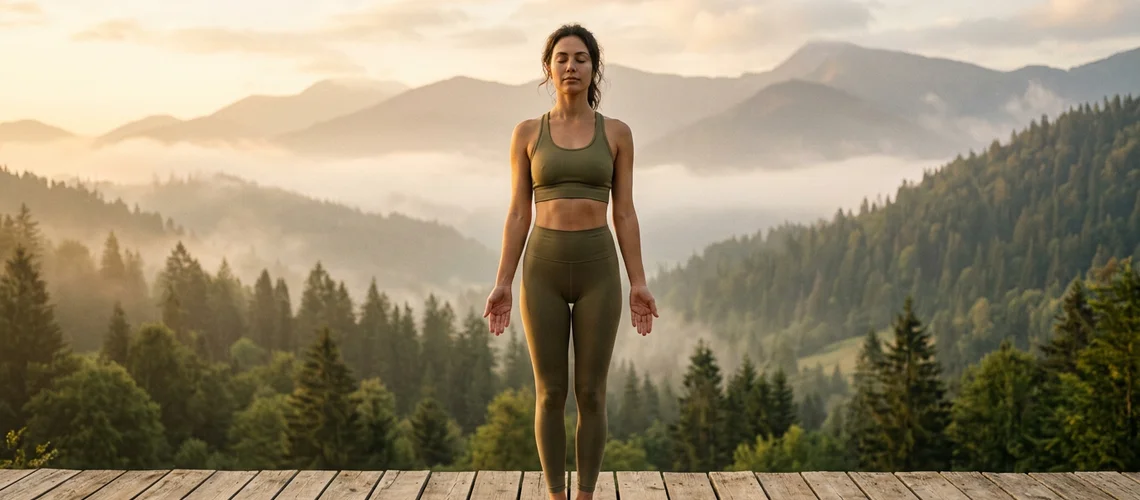
Tadasana, or Mountain Pose, is the root of all standing yoga poses. It looks simple, but it is precisely here that you learn the alignment that will support every other asana.
Stand with your feet together or slightly apart and distribute your weight evenly between them. Lengthen your spine, open your chest and gently lift your tailbone. Relax your shoulders away from your ears, let your arms rest by your sides and direct your gaze forward.
Breathe slowly and gently engage your legs and abdomen to hold yourself without straining. With practice, it improves posture, settles the legs and sharpens concentration. You will find the full details in the guide to Mountain Pose or Tadasana.
Vrksasana (Tree Pose)
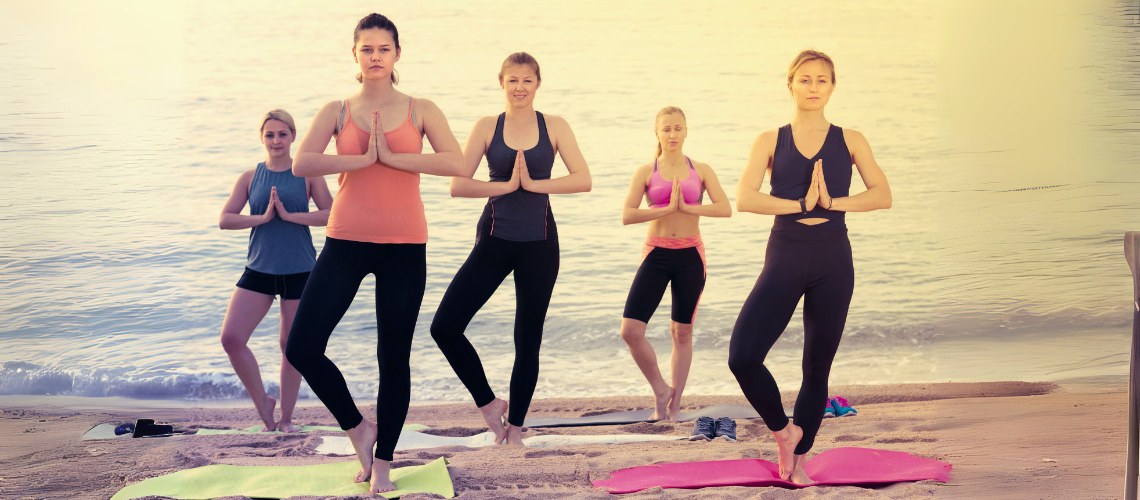
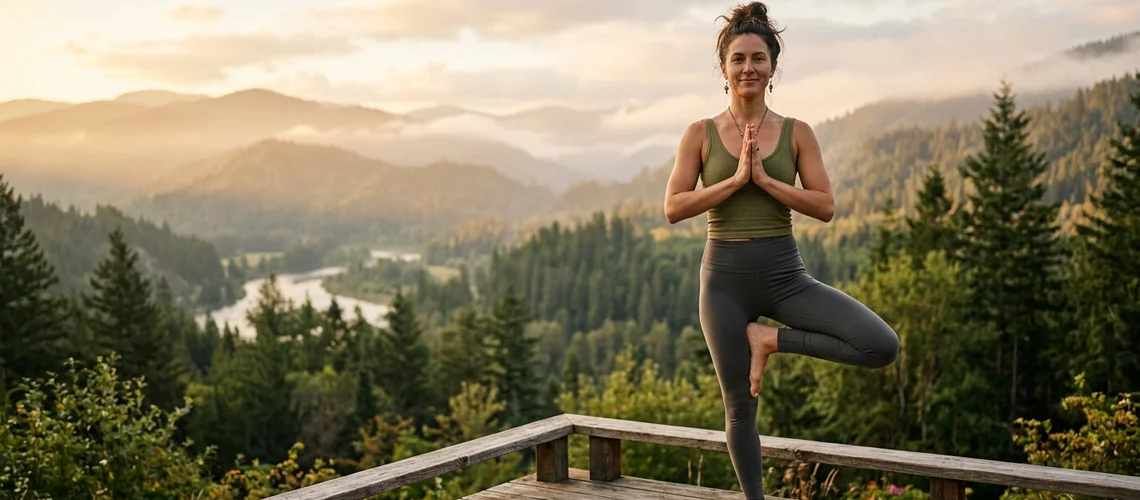
Vrksasana trains balance and concentration like few other poses. Start in Tadasana, well grounded and with your weight spread evenly over both feet.
Lift one leg, open the knee and press the sole of your foot against the inner thigh of the standing leg; avoid placing it on the knee so you do not strain the joint. Bring your hands to the centre of your chest or stretch them up to the sky, and fix your gaze on a still point.
Breathe deeply and hold for several breaths before coming down with control and switching sides. Tree Pose strengthens the legs, opens the hips and, above all, teaches you to find calm within movement.
Utkatasana (Chair Pose)
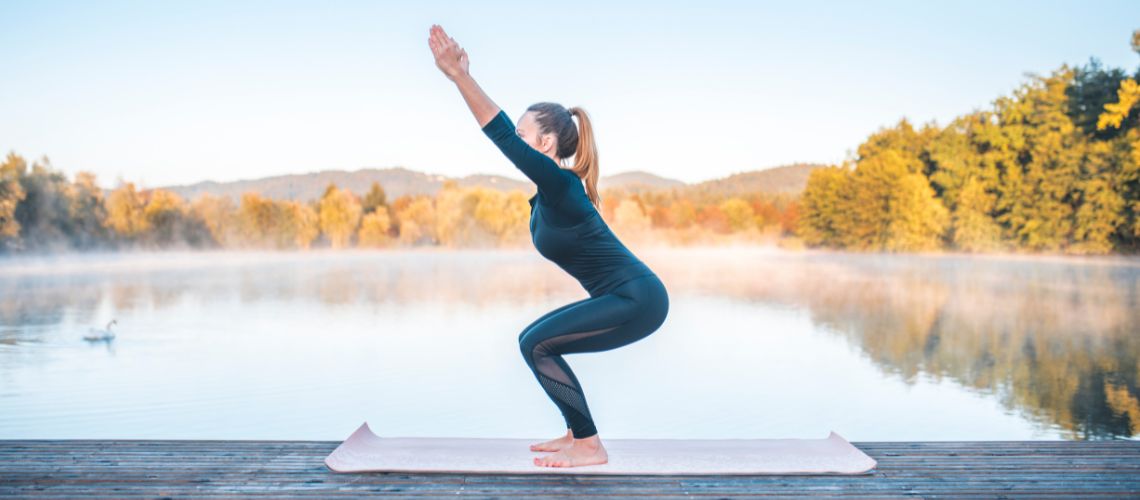
Known as the chair, Utkatasana fires up the thighs, glutes and back while testing your endurance. Begin in Tadasana, with your feet together or slightly apart.
Bend your knees as if you were about to sit in an imaginary chair and bring your weight into your heels. Lengthen your spine, open your chest and raise your arms forward or overhead, with your shoulders relaxed and your abdomen engaged.
To come out, straighten your legs and return to Tadasana without rushing. Held regularly, Chair Pose builds strength in the legs and back and trains determination as much as the body.
Virabhadrasana I (Warrior I)
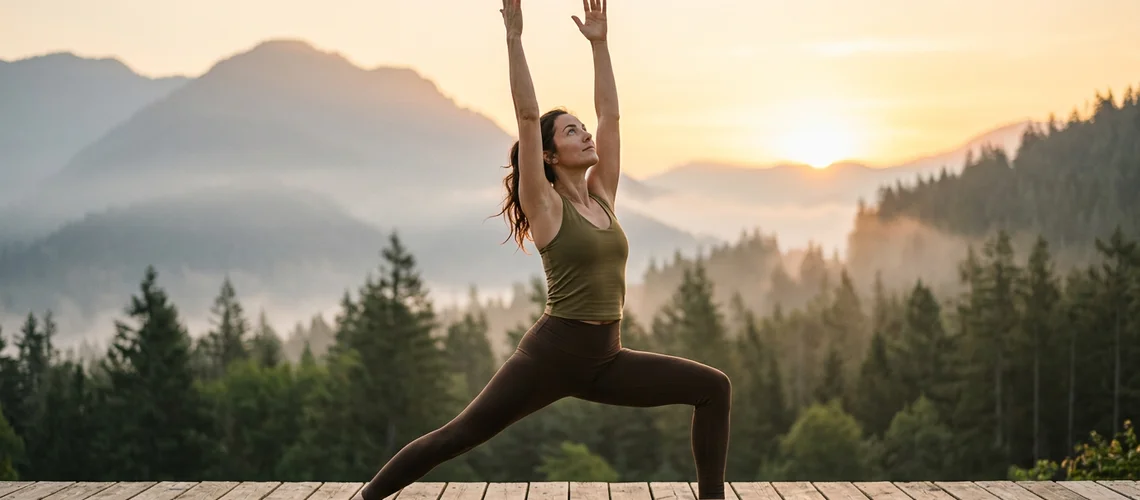
The first warrior is a pose of strength and openness. Step one leg back into a wide stance, bend the front knee over the ankle and root the foot firmly down.
Raise your arms up to the sky with relaxed shoulders and a long spine. Turn the back heel slightly outward, bring your hips to the front and direct your gaze forward or up toward your hands.
Warrior I pose builds strength and mobility in the legs and hips and sharpens concentration. Practised often, it cultivates a calm confidence that shows both on and off the mat.
Virabhadrasana II (Warrior II)
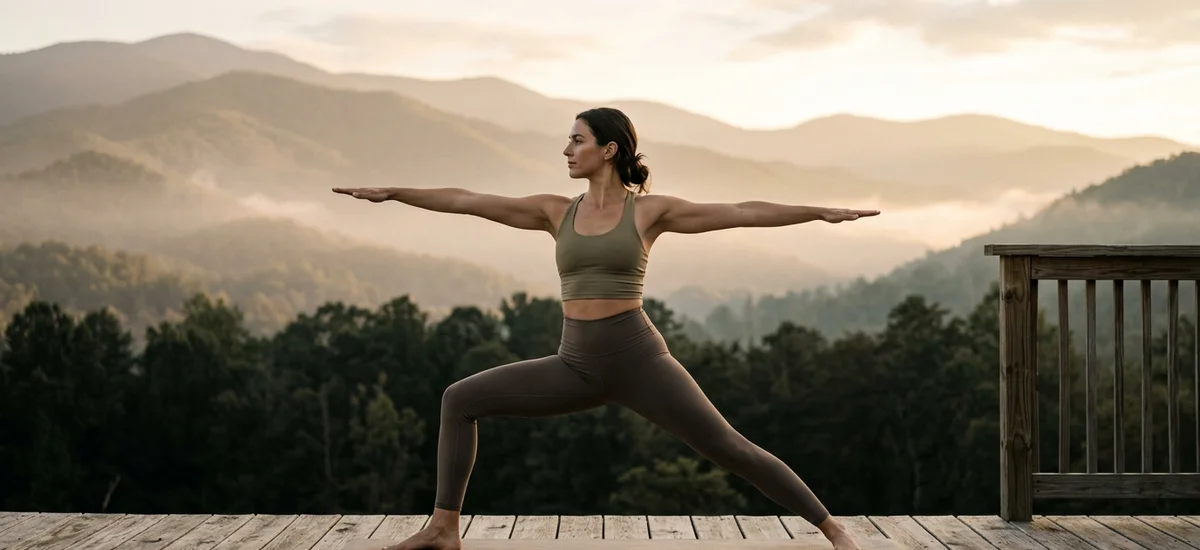
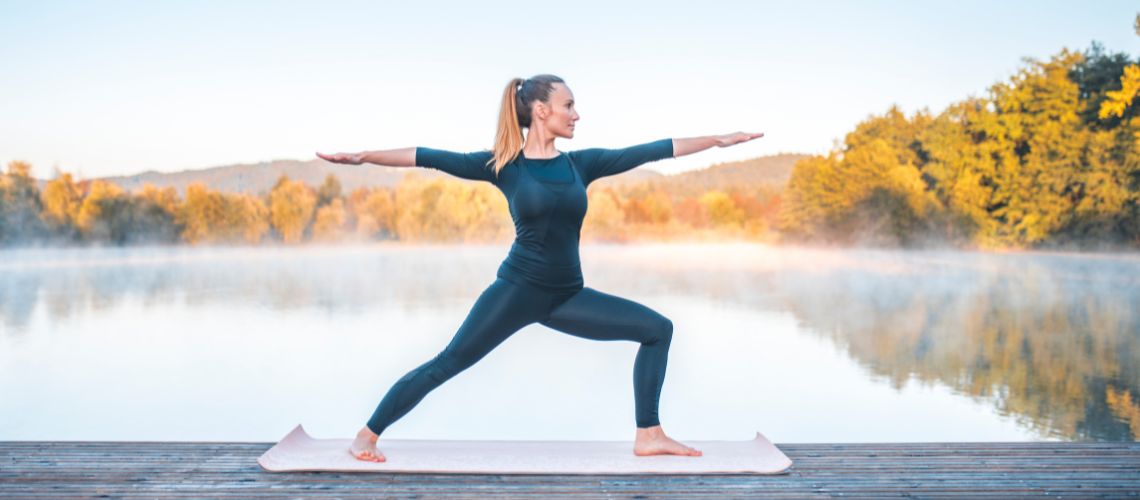
The second warrior combines firm legs with an open chest and a determined gaze. Step one leg back into a wide stance, bend the front knee and keep the foot firm on the floor.
Extend your arms parallel to the floor, palms facing down and shoulder blades wide. Turn the back heel outward and rest your gaze over the front hand to anchor your balance. Breathe deeply and stay for several breaths.
Warrior II pose strengthens the legs, opens the hips and trains mental endurance. Over time, that physical stability turns into poise.
Trikonasana (Triangle Pose)
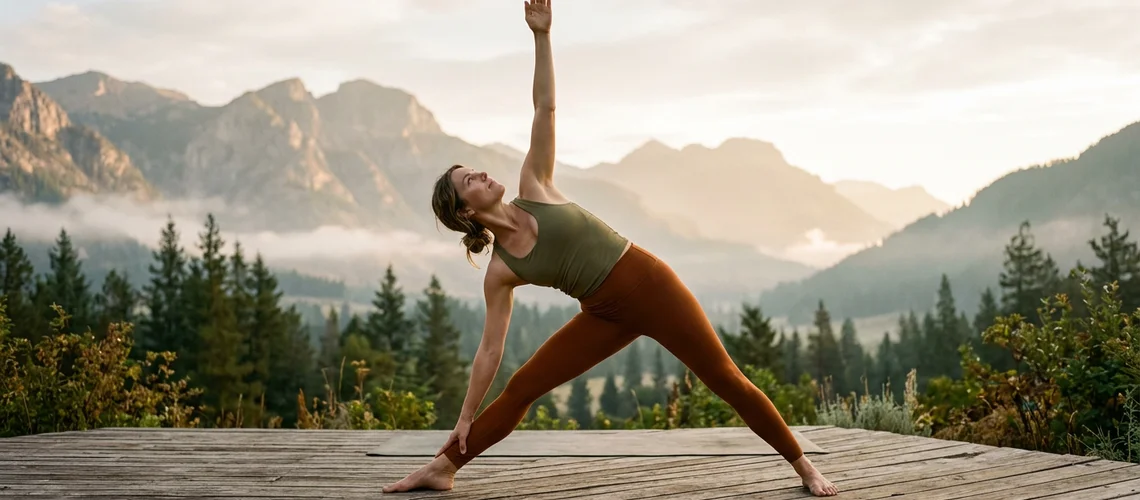
The triangle lengthens the sides of the body while challenging your balance. Stand with your legs about a metre apart, one foot facing forward and the other turned slightly back.
Tilt your torso toward the front leg and lower one hand toward the ankle, the foot or the floor, while the other arm stretches up to the sky. Keep your chest open, your spine long and your gaze toward the upper hand or forward.
Triangle Pose, or Trikonasana, stretches the waist, improves circulation and releases stress. Repeated with patience, it brings flexibility to the legs and spine and a remarkable sense of spaciousness.
Parsvottanasana (Intense Side Stretch Pose)
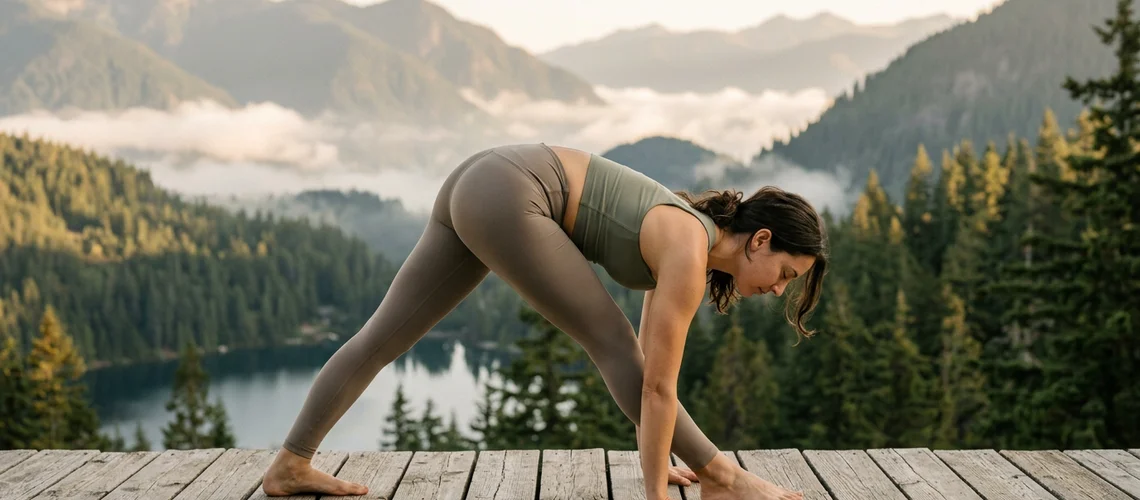
Parsvottanasana deeply stretches the hamstrings and frees the spine. Start standing with your legs together and step one leg forward into a long stance.
Fold your torso over the front leg keeping your back long, and rest your palms on the floor or on your shins. Breathe deeply, relax your neck and hold your balance for several breaths.
This asana quietens the mind, stretches the back and legs and eases tension. It works very well as a counterpose to the more dynamic standing poses, bringing calm back to the body.
Ardha Chandrasana (Half Moon Pose)
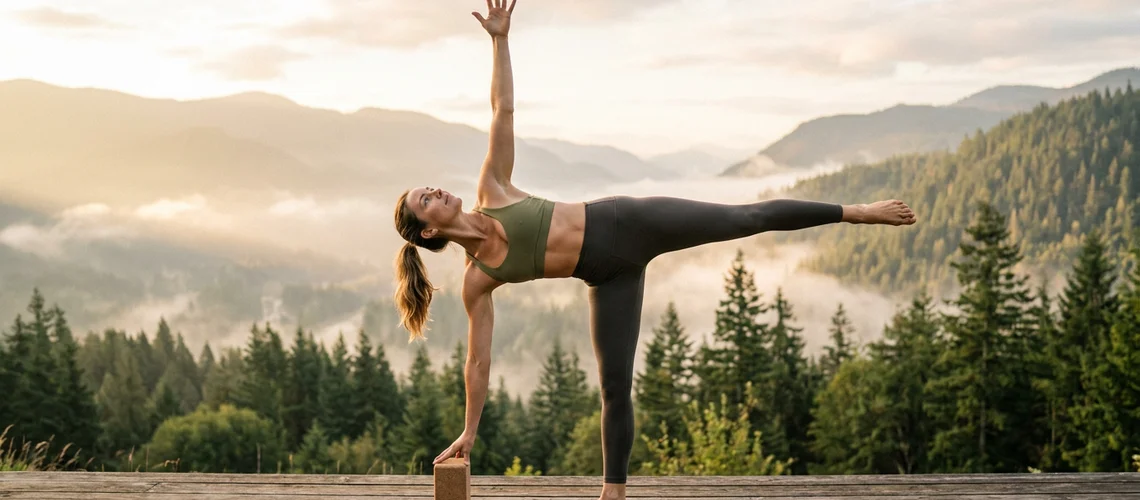
Half Moon takes balance to another level. Begin in Virabhadrasana II, tilt your torso forward and place one hand on the floor or on a block.
Lift your back leg until it is parallel to the floor and open your free arm up to the sky, drawing a diagonal line with your whole body. Fix your gaze on the lifted hand to hold the pose and breathe calmly.
Ardha Chandrasana strengthens the legs and abdomen, stretches the sides of the body and sharpens concentration. It is demanding, but it rewards you with a sense of lightness and openness that is hard to match.
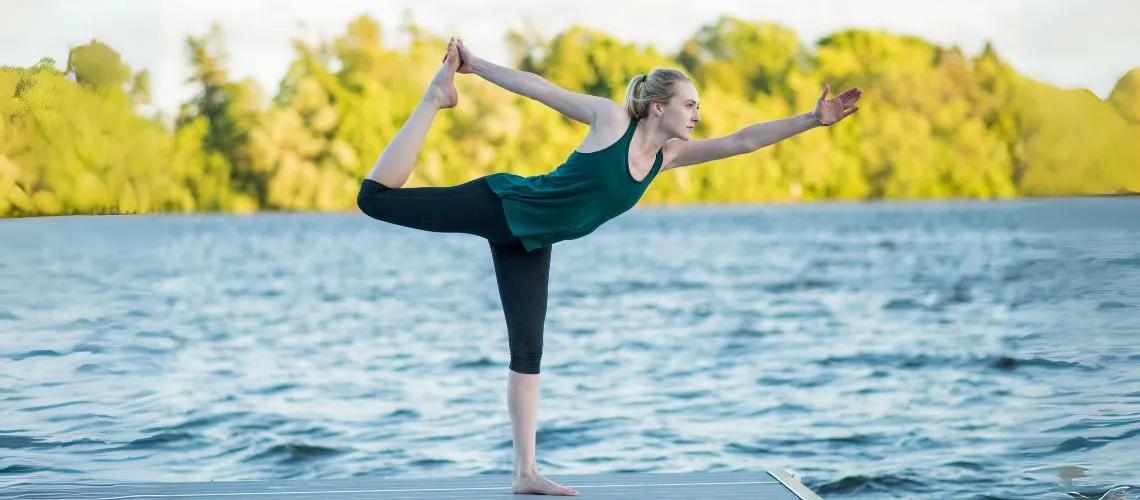
Natarajasana (Lord of the Dance Pose)
Natarajasana, the Lord of the Dance Pose, brings together balance, strength and grace in a single gesture. Start in Tadasana, with your weight evenly distributed over both feet.
Tilt your torso slightly forward, take one leg back and hold the top of the foot with the hand on the same side. Stretch the opposite arm forward to balance, lengthen your spine and keep your gaze on a fixed point.
Dancer Pose, or Natarajasana, strengthens the legs and back, stretches the front of the body and demands full concentration. With practice, it brings an elegance born of stability.
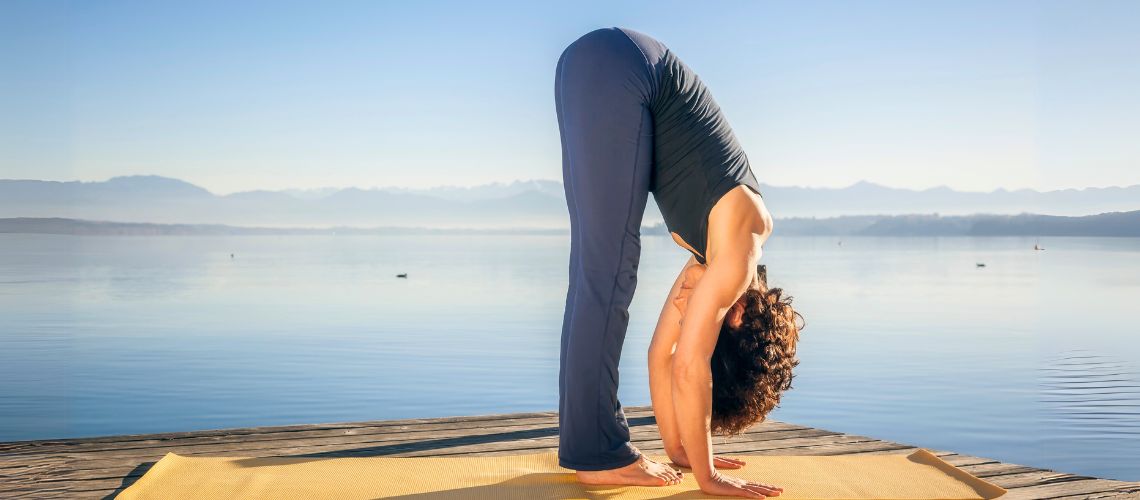
Uttanasana (Standing Forward Bend)
Uttanasana closes the standing work with a forward bend that calms and releases. Stand with your feet together and fold from the hips, not the waist, keeping your back long.
Let your arms and head hang toward the floor, or hold opposite elbows. Soften your neck, breathe deeply and stay for several breaths, letting gravity do the work.
This pose builds flexibility in the hamstrings and spine, releases the back and calms the mind. It is the perfect transition to return to stillness after a standing sequence.
Benefits of standing yoga poses
Standing poses are not just a link in the sequence: they are a direct path to connect with your inner strength and your capacity for attention. Practising standing yoga consistently builds stability, endurance and sharper mental focus.
On the physical level, these standing yoga exercises tone the legs and core, correct alignment, boost circulation and release built-up tension. On the mental level, they reduce stress and cultivate a balance that holds far beyond the mat.
Our teaching team, led by Prashant Pandey —trained at the Bihar School of Yoga (India)—, insists on one key point: a well-built standing foundation, with attention to alignment and breath, prevents injuries and lets the rest of the practice flow. If you want to take this knowledge to the next level, our online yoga teacher training with certification gives you the tools to teach it with sound judgement.
And remember: yoga is not about perfection, but about steady practice, listening to your body and self-compassion.
Frequently asked questions about standing yoga
What are the most important standing yoga poses?
The essential standing asanas are Tadasana, Vrksasana, Utkatasana, Warrior I and II, Trikonasana and Uttanasana. They appear in almost every sequence and work on balance, strength and alignment, which is why they are the best starting point.
What are the benefits of standing yoga poses?
They strengthen the legs and core, improve posture and circulation, build flexibility and reduce stress. They also train concentration and that sense of grounding that defines a mature practice.
Which standing yoga poses are good for beginners?
Tadasana, Utkatasana and Vrksasana are ideal to begin with: they teach you to align the body and find balance without too much demand. At first, it helps to practise them near a wall to build confidence.
Which standing poses help with balance?
Vrksasana (the tree), Natarajasana (the dancer) and Ardha Chandrasana (the half moon) are excellent for balance, because they require you to hold the body on one leg while fixing your gaze on a single point.