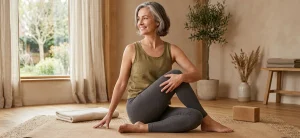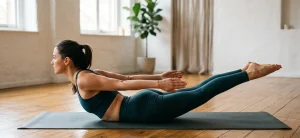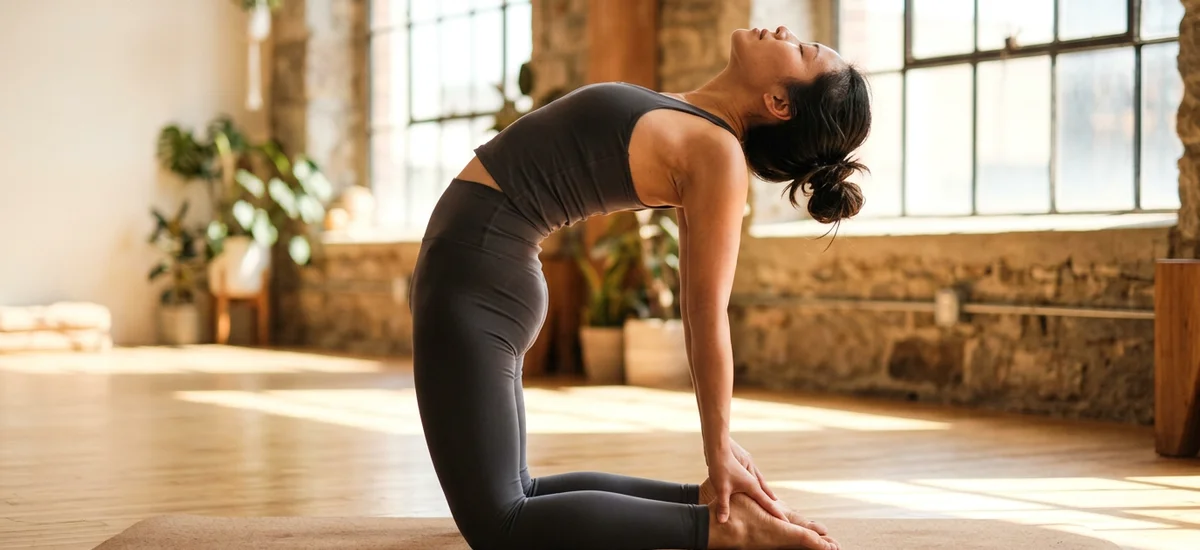
There are postures that stay in the body. And there are postures that, after holding them, leave something different in the breath, in the gaze, in the way of stepping out into the world. Ustrasana is one of those.
The camel pose is practiced in almost all modern yoga traditions. It appears in Hatha, in Ashtanga, in Vinyasa, and also in the more dynamic classes of Rocket or Power Yoga. Its popularity is not coincidental: it is one of the most accessible extensions to open the thoracic spine and one of the most powerful for releasing held emotions.
In this article, we will see what its name means, how to execute it without straining the lower back, why it can provoke unexpected emotional reactions, and how to prepare for it with sufficient warming up.
Meaning and origin of the name
The word Ustrasana comes from the Sanskrit ustra (उष्ट्र), which means “camel,” and asana (आसन), “posture.” The literal translation is simply “camel posture.”
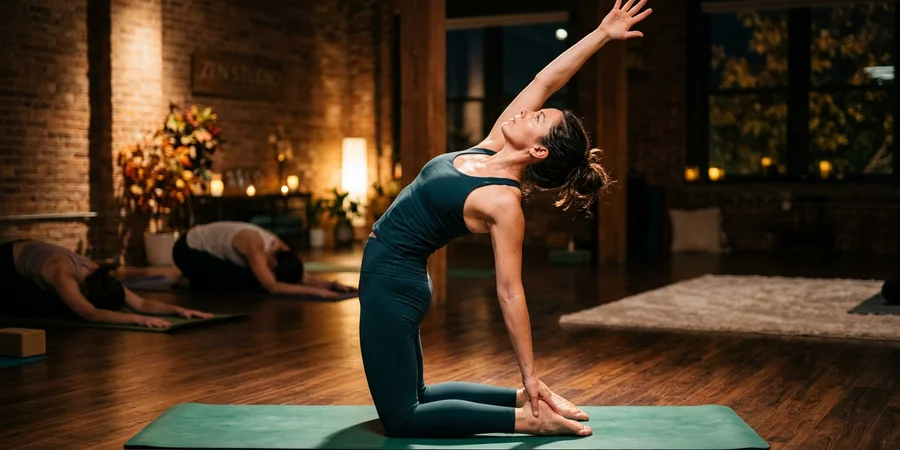
The name describes the visual shape of the asana: the body creates, while holding the posture, a hump similar to that of the animal. The knees and shins are the front legs; the chest raised backward forms the hump. The image is clear and didactic.
In yogic symbolism, the camel represents resilience and the ability to traverse difficult terrains with little water. In the body, Ustrasana also crosses an infrequently traveled territory: the front space of the thorax, which in most modern adults remains closed for hours of work in front of screens.
An accessible extension with great range
Ustrasana is an intermediate extension within the family of backbends. It is deeper than the cobra of Sun Salutation and serves as preparation for more advanced extensions like Chakrasana or Kapotasana.
That is why it is taught as the “door posture”: those who hold it with good alignment have the foundation to access the entire universe of deep extensions. And those who practice it with attention learn something much more important than flexibility: they learn to open the chest without sacrificing the lumbar area.
Necessary preparation before Ustrasana
One of the reasons why Ustrasana has a bad reputation (when it does) is because it is entered without preparation. Extensions require specific warming up. Entering cold is the quickest route to discomfort in the lower back.
Before holding Ustrasana, it is necessary to warm up the spine, shoulders, and quadriceps with a sequence that mobilizes those areas. Preparation is not optional: it is part of the posture.
A typical preparatory sequence includes cat-cow to mobilize the entire spine, sphinx and cobra to awaken the thoracic extension, and a brief opening of the quadriceps in knight pose (Anjaneyasana). With this prior journey, Ustrasana becomes the natural closure of the opening, not a leap into the void.
How to do Ustrasana step by step
The following description corresponds to the full version. If the quadriceps are tight or the shoulders stiff, begin with the half camel version described in the variations.
- Kneel on the mat. Place your knees hip-width apart and your shins parallel. The tops of your feet may be resting on the floor or, if you prefer more stability, with your toes curled inward.
- Root the pelvis and activate the legs. Press the shins and the tops of the feet firmly against the ground. The quadriceps activate and the glutes engage slightly to stabilize the pelvis. The knees should never open wider than the hips.
- Place the hands on the lower back. Bring the thumbs to the sacrum and the fingers towards the glutes. Use this starting position to feel if the lower back compresses when beginning the extension. If discomfort arises, stop and adjust.
- Lengthen before extending. Inhale and grow from the pubis to the crown. Visualize the spine stretching upwards before going back. This initial lengthening is key to protecting the lower back during the extension.
- Push the pelvis forward. As you exhale, bring the hips forward over the knees. The extension comes from that pelvic push, not from the lower back. The pelvis advances; the chest rises and opens.
- Open the chest towards the ceiling. Lift the sternum upward and backward, as if a rope were pulling the center of the chest towards the sky. The shoulder blades descend down the back and come together towards the spine.
- Bring your hands to your heels. Only when the chest is well lifted, bring your hands towards your heels. If you can’t reach without collapsing the chest, keep your hands on your lower back or on blocks placed at the sides of your ankles.
- Carefully release the head. If the neck allows it, gently let the head fall back. If you feel cervical compression or dizziness, keep the chin slightly towards the chest and look forward.
- Breathe and hold. Stay for 5 to 8 deep breaths. Feel how the chest opens with each inhalation and unnecessary tension releases with each exhalation. To come out, bring your hands to the lower back, lift the chest first, and the head last.
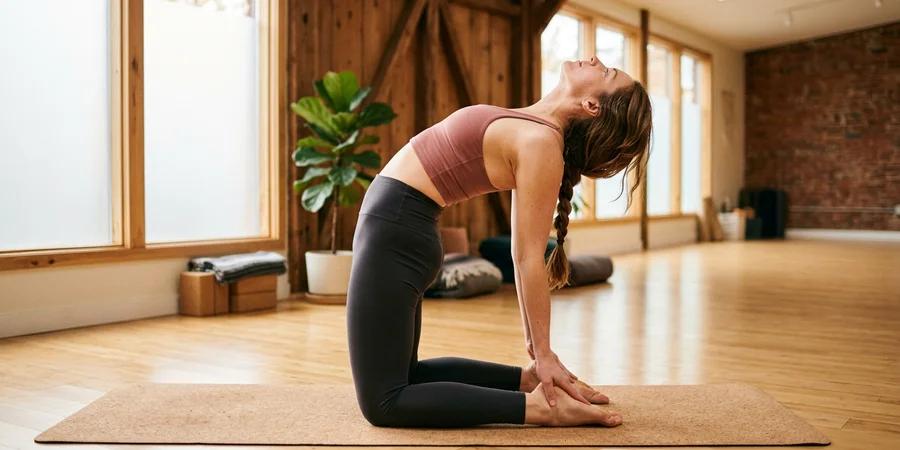
Proper alignment: push from the hips, not from the back
The most common mistake in Ustrasana is extending from the lower back instead of from the hip joint and thoracic spine. That pattern puts all the load on the lumbar vertebrae and can cause persistent discomfort.
A good Ustrasana distributes the extension throughout the entire spine, with emphasis on the thoracic area, which needs it the most in modern life. The lumbar participates, but it is not the center of the action.
Pelvis and quadriceps
The hips should be aligned over the knees or slightly in front. If the pelvis is behind the knees, all the curvature falls on the lumbar. Pushing the pubis forward with the activation of quadriceps and glutes is the key correction.
The quadriceps should be active throughout the pose. If the thighs relax, the pelvis drops and the extension loses its support. Imagine pushing the ground back with your shins, as if you want to move the mat towards your toes.
Keep the knees hip-width apart, no more. If the knees open, the sacroiliac area is overloaded. If they come together, the quadriceps lose leverage. The exact hip width is the neutral position that protects the joint.
Pectoral, shoulders, and neck
The extension should be felt in the thoracic spine, that area between the shoulder blades which is stiff in most adults. Lifting the sternum up and back mobilizes right there. If you only feel the extension in the lower back, the thoracic area is not opening.
The shoulders descend and move closer to the spine. This retraction activates the middle and lower trapezius, stretches the pectorals, and opens the chest without having to force the shoulders. Without this action, the shoulders tend to rise towards the ears and the neck becomes compressed.
The neck follows the natural line of the spine. If you have mobility, gently let your head fall back. If you feel any discomfort or dizziness, keep your head in a neutral position, looking straight ahead. Never force the neck into an extension.
Benefits of Ustrasana
Few postures work so much space at once. Ustrasana acts on the spine, the front organs, the respiratory system, and the emotional state in a single gesture.
Physical benefits
The posture mobilizes the thoracic spine, that area which remains rigid in almost all modern adults. Few daily actions require extending the thoracic area backwards, and that accumulated rigidity produces kyphotic posture and referred cervical pain.
Ustrasana deeply stretches the hip flexors, quadriceps, and pectorals. This muscle triad is often shortened by excessive sitting and closed posture patterns. Its regular stretching restores the anterior-posterior balance of the body.
At a respiratory level, the opening of the chest expands lung capacity and improves diaphragm mechanics. People with shallow breathing or those with intense sedentary work often notice a significant change in the depth of their breathing after a few weeks of regular practice.
The gentle compression of the posterior abdominal organs also stimulates the kidneys and adrenal glands, enhancing their function and contributing to the hormonal regulation of stress.
Why Ustrasana Can Elicit Emotions
It is common for practitioners to experience an intense emotional reaction after Ustrasana: a desire to cry, sudden laughter, restlessness, joy, or an unexpected sense of vulnerability. This is not a coincidence or anecdotal.
In the yogic tradition, the area of the chest corresponds to the Anahata chakra, the heart center. Deep stretches open this physical and energetic space and can release emotions that were held in the closed posture of the thorax.
On a biomechanical level, the pectoral muscles and diaphragm hold chronic tension linked to stress. When released suddenly, the nervous system can respond with an emotional release. If it happens, it is a sign that the posture is doing its work. Just breathe, let it pass, and do not be alarmed.
Variations and Modifications
Ustrasana allows for multiple levels of depth. The full version is not accessible to all bodies from day one, but there are modifications that allow for working the pose safely at any point along the way.
For Beginners or Tight Backs
Half Camel. Keep one hand on the lower back while the other reaches for the heel. This reduces the depth of the extension by half and allows for getting familiar with pelvic thrust and chest opening without going into the full range. It is the most commonly used and most helpful entry point.
With blocks next to the ankles. Place two blocks on either side of the ankles and bring the hands onto them instead of the heels. This elevation preserves all the essence of the pose while reducing the necessary range. Ideal when the shoulders or quadriceps are limiting.
With the toes flexed inward. If the insteps cannot rest on the ground or you feel the pelvis is too far from the heels, flex the toes and place the tips of the feet down. Lift the heels and bring the support closer, making the pose much more accessible.
To deepen
Ustrasana with hands in reverse position. Once the classic pose is held with the hands on the heels, bringing the hands to the soles of the feet intensifies the thoracic extension and prepares the body for Chakrasana (the wheel pose).
Kapotasana as progression. Ustrasana is the direct preparation for Kapotasana, the inverted pigeon pose, where the forearms descend to the ground behind the head. Only after consolidating the full camel for months or years does it make sense to explore this advanced extension.
With wall or chair support. Practicing Ustrasana with the back partially supported against a wall or with the hands on the edge of a chair placed behind transforms the pose into a sustained and restorative opening. Useful for prolonged opening sessions.
Counterpose and closure after Ustrasana
After a deep extension, the body needs a counterpose to offset the backward curvature. Skipping this phase leaves residual tension in the lower back and may cause discomfort hours later.
The classic counterpose for Ustrasana is Balasana (Child’s Pose). After coming out of Camel, sit on your heels, lower your torso forward, and rest your forehead on the ground. Stay for several breaths to allow the lumbar spine to return to neutrality.
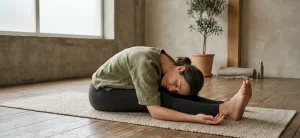
Alternatively, you can practice a gentle seated forward bend like Paschimottanasana with a long spine. The key is to give the body a few minutes of gentle bending to balance the intense extension. Never move directly from Ustrasana to another active pose without closing with the counterpose.
Contraindications
Ustrasana is generally safe, but there are situations that require caution or modification.
If you have lumbar disc herniation, spondylolisthesis, or chronic lower back pain, practice only the half camel version with your hands on the lower back. If pain occurs, exit the pose and substitute it with a gentler extension like the sphinx.
In case of knee injuries, place a folded blanket under the knees to cushion the pressure. If discomfort persists, practice the pose on a padded surface or temporarily avoid it until resolved.
With cervical issues, do not let the head fall back. Keep the neck in a neutral position, with the gaze forward or slightly upward. Thoracic extension still occurs without needing to mobilize the neck.
If you have high blood pressure, practice with moderation and avoid prolonged maintenance. In case of hypotension, exit the pose slowly to avoid dizziness.
During advanced pregnancy, deep extensions are not recommended. Substitute with gentle extensions with support, such as sphinx or small chest openings on a bolster. Avoid the full version.
The camel that teaches to open without hardening
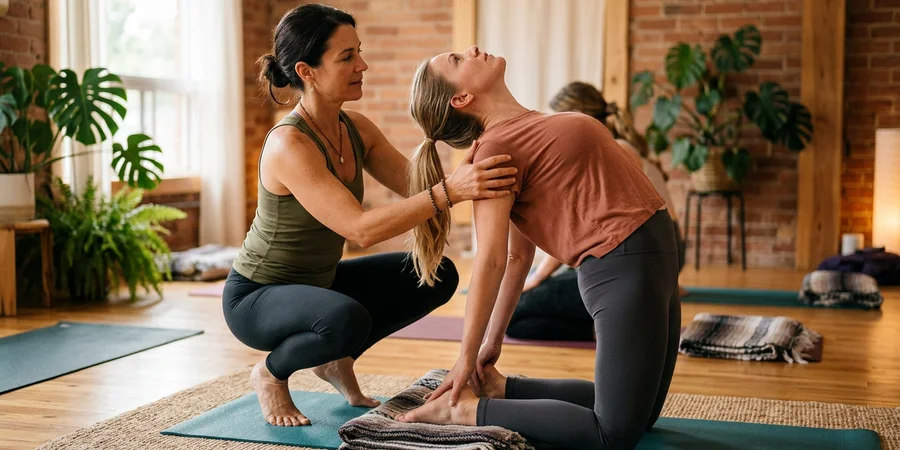
Ustrasana has a particular quality among the asanas: it leaves you different. After holding it with good alignment, the chest breathes more, the walking posture changes, and the gaze seems wider. It is not a suggestion: it is the real effect of a thoracic spine that moves and a diaphragm that is released.
That is why the tradition associates it with the heart and emotional openness. Not because it is a mystical posture, but because the body and emotion cannot be separated. Opening the physical space of the chest is, inevitably, making room for what we carry inside.
Practicing it with patience teaches something that few postures teach so well: that sustained opening requires both ground and ceiling. Without a rooted pelvis, there is no elevated chest. Without active quadriceps, there is no thoracic release. Opening is not letting go of everything: it is letting go in the right direction.
If you want to learn how to teach the poses with anatomical criteria, prepare the body with progressive sequences, and adapt Ustrasana to different levels, our 200h Yoga Teacher Training Course includes complete modules on applied biomechanics and on how to teach the yoga poses safely.