
Menopause is not a disease to be fought, but a natural transition that deserves to be accompanied with respect. In this stage, yoga offers something rare: a tool that addresses the body, the mind, and the nervous system at the same time.
During perimenopause and menopause, the drop in estrogen alters sleep, body temperature, mood, and bone density. There is no single practice that solves everything, but there is an approach that helps navigate the change with greater calm and steadiness.
In this article, you will discover how yoga accompanies the most common symptoms of this stage, which styles are most suitable from the age of forty-five onwards, and which specific postures to incorporate into your practice safely and gently.
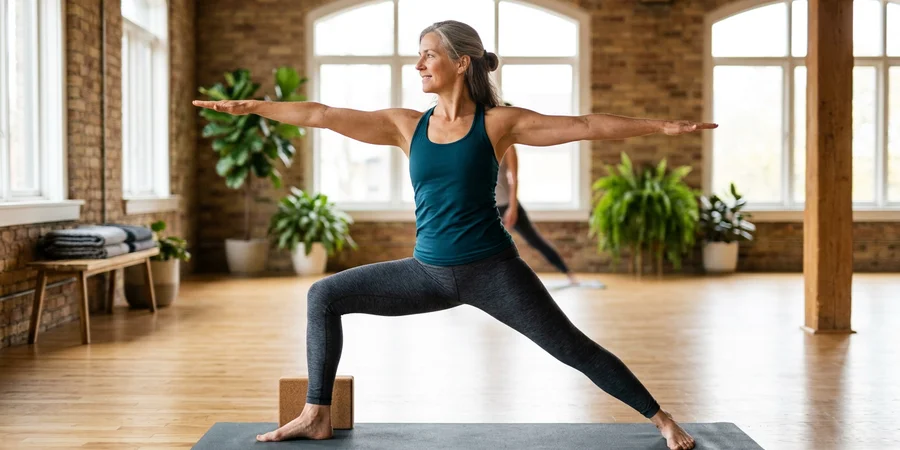
What changes in the body during menopause
Menopause is confirmed when twelve months have passed without menstruation, usually between the ages of forty-five and fifty-five. Perimenopause is the previous phase, which can last several years and where symptoms often appear with greater intensity.
The driver of these changes is the progressive drop in estrogen and progesterone. These hormones do not only regulate the menstrual cycle: they influence thermoregulation, rest, mood, cardiovascular health, metabolism, and bone mineralization.
This is why symptoms are so varied. Hot flashes and night sweats, insomnia, irritability, anxiety, brain fog, weight changes, and weakening of the pelvic floor often coexist in varying degrees. Every woman experiences this stage in a unique way.
Yoga does not stop this physiological process nor does it replace any medical treatment. What it offers is accompaniment: it regulates the nervous system, strengthens the body in a kind way, and restores a sense of control over what is being experienced.
Benefits of yoga in menopause and perimenopause
Research on yoga and menopause has grown in recent years, and although studies are still heterogeneous, they point in a direction consistent with what tradition has been observing for centuries. These are the fronts where practice is most useful.
Hot flashes, insomnia, and night-time rest
Hot flashes originate from a dysregulation of the thermoregulatory center in the hypothalamus. Practices that activate the parasympathetic nervous system help modulate that response and reduce the sensation of the heat wave when it appears.
Rest also improves. Restorative postures and slow breathing before sleeping lower physiological activation, make it easier to fall asleep, and reduce awakenings due to night sweats. It is not magic: it is the physiology of rest applied with intention.
The key is to avoid intense or very stimulating practice late in the day. A gentle evening session prepares the body for rest, while a vigorous flow can have the opposite effect and make sleep difficult.
Mood, anxiety, and mental clarity
The drop in estrogen affects neurotransmitters linked to well-being, which explains the greater vulnerability to anxiety, sadness, and irritability at this stage. Yoga acts directly on the stress axis.
The combination of mindful movement, breathing, and mindfulness reduces cortisol levels and favors a more stable parasympathetic response. Many practitioners describe a greater ability to hold emotions without feeling overwhelmed.
So-called brain fog also finds relief. Practicing awareness of the body and breath trains concentration and offers a space of calm where the mind, so accelerated in these years, finds a point of stillness.
Bone health, pelvic floor, and metabolism
The loss of estrogen accelerates the loss of bone mass, increasing the risk of osteopenia and osteoporosis. Postures in which the body bears its own weight, practiced with good alignment, offer a mechanical stimulus that helps maintain bone density.
The pelvic floor is also affected by hormonal changes and tends to lose tone. Mindful work on breathing and the deep muscles of the abdomen and pelvis contributes to supporting this area and preventing urinary discomfort.
Regarding metabolism, regular practice helps regulate weight indirectly: it improves sleep, reduces the stress that promotes abdominal fat storage, and maintains a kinder relationship with the body and food.
These benefits do not appear overnight. They are built with consistency, in regular and kind sessions that the body appreciates. More than the intensity of each practice, what makes the difference at this stage is sustained continuity over time.

Which yoga styles are most suitable at this stage
Not all yoga feels the same during menopause. The body at this stage asks for an approach that nourishes instead of depleting, and that regulates the nervous system instead of overstimulating it. The choice of style makes the difference.
Restorative yoga is probably the most indicated. Its sustained postures with supports invite the body into a deep rest, activate the parasympathetic response, and are ideal for nights of hot flashes or days of greater exhaustion.
Yin Yoga provides slow and meditative work on deep tissues and joints. Holding postures for several minutes cultivates patience and acceptance, two very valuable qualities when the body is changing in ways we do not control.
A gentle Hatha or a kind Vinyasa, with a slow pace, also have a place. They provide the component of strength and load that bone health needs, provided they are practiced listening to the body and without turning the session into a competition with oneself.
There is no need to choose a single style. The ideal is to combine them depending on the moment: a gentle Hatha or some strength on days with energy, and a restorative or Yin session when the body asks for rest. The practice adapts to you, and not the other way around.
Why avoid overexertion
The temptation exists to push oneself harder to compensate for body changes, but in menopause, overexertion is usually counterproductive. A practice that is too intense raises cortisol, disrupts sleep, and can aggravate anxiety and hot flashes.
Joints and tendons also respond differently over the years, and the risk of strain increases. The goal is not to go further in each posture, but to find the point where the body works without going into alarm.
The rule is simple: the practice should leave you with more energy than you had when you started, not depleted. If you end up exhausted or tense, it is advisable to review the intensity. Less, done with presence, is usually more at this stage of life.
Recommended yoga postures during menopause
The following yoga postures are especially kind to the menopausal body. It is advisable to practice them with slow breathing, using blankets, cushions, or a bolster as support whenever they provide comfort and allow for the release of tension.
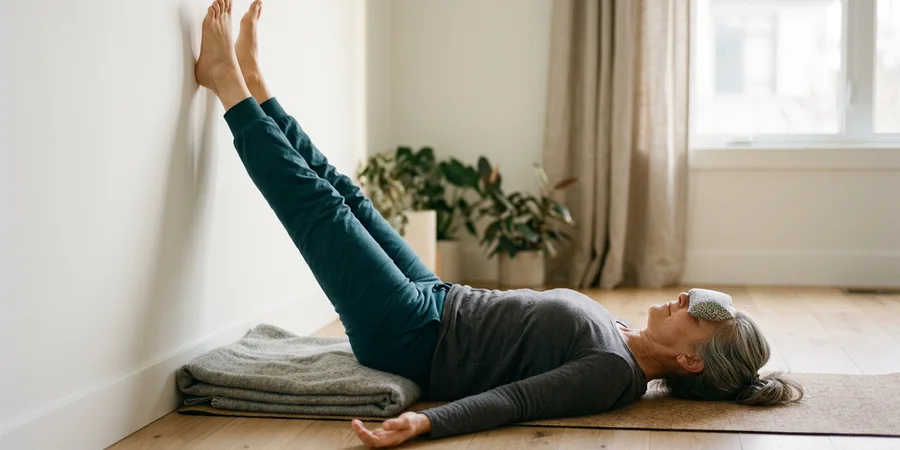
Viparita Karani (legs up the wall). Lying on your back with your legs resting against the wall, this gentle posture slightly inverts circulation, rests the legs, and calms the nervous system. It is one of the great allies against insomnia and the feeling of exhaustion at the end of the day.
Supta Baddha Konasana (reclined goddess). Lying with the soles of the feet together and knees open, supported by cushions, it gently opens the hips and pelvis. It brings a deep sense of openness and surrender, and is very useful for releasing abdominal and emotional tension.
Balasana (child’s pose). Sitting on the heels and folding forward, with the forehead resting and arms relaxed, it calms the mind and rests the back. Resting the torso on a bolster makes it an ideal restorative variant for moments of anxiety or fatigue.
Gentle reclined twists. Lying on your back, letting the bent knees fall to one side, these offer a gentle rotation of the spine that releases the back and gently massages the abdominal area. Being passive, they avoid the tension of deeper seated twists.
Setu Bandha Sarvangasana (gentle bridge). Lying down with knees bent, lifting the pelvis only as much as necessary, it strengthens the back, glutes, and pelvic floor, and opens the chest. Practiced gently or with a block under the sacrum, it combines toning and rest.
To close the practice, spend a few minutes in the corpse pose. This final relaxation integrates the benefits of the session, invites the nervous system into deep rest, and teaches something that menopause often asks for: the art of letting go.
Breathing and pranayama for hot flashes and rest
If there is one yoga resource especially valuable in menopause, it is mindful breathing. Pranayama breathing techniques act directly on the nervous system and can be practiced at any time, even in the middle of a heat wave.
Slow and prolonged breathing, lengthening the exhalation more than the inhalation, activates the parasympathetic system and helps lower the body’s activation. Practiced upon noticing the first signs of a hot flash, it can soften its intensity and restore a sense of control.
A classic technique that is especially useful is cooling breathing. Inhaling slowly through the mouth, with the tongue curled or lips parted, and exhaling calmly through the nose generates a sensation of coolness that many women find comforting in the face of heat.
For night-time rest, a few minutes of abdominal breathing before sleeping prepares the body for repose. Placing a hand on the belly and feeling how it rises and falls with each breath anchors attention and deactivates the mental rumination that so often steals sleep.
The valuable thing about breathing is that it is always available. It requires no mat or space: it is a portable tool that you can take with you throughout the day, at work, or in bed, when the body needs it most.
Listen to your body and accompany yourself well
Yoga is a great ally during menopause, but it is not a substitute for medical care. Every woman and every clinical history is different, and symptoms can hide other causes that should be assessed. The practice accompanies; it does not diagnose or cure.
Therefore, it is important to maintain follow-up with your gynecologist or health professional, especially if symptoms are intense, if you have risk factors for osteoporosis, or if you are considering hormonal treatment. Yoga adds to that care; it does not replace it.
It is also advisable to learn from a qualified teacher, especially when adapting postures to your needs. Good accompaniment helps you respect your limits, use the correct supports, and avoid overstrain in a stage where the body asks for more care.
Listening to the body is, in essence, the central teaching of this stage. Menopause invites you to abandon high demands and cultivate a kinder relationship with yourself. Yoga, with its millenary roots in India, offers exactly that path of presence and acceptance.
If this transition awakens in you the desire to deepen and understand yoga from within, the online yoga teacher training from Kavaalya offers you comprehensive knowledge from the cradle of yoga, whether you want to teach or simply wish to better accompany yourself in the years to come.