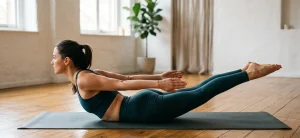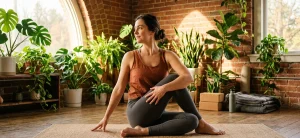
Pregnancy transforms the body week by week, and along with it, the needs of your practice change. Prenatal yoga adapts the ancient wisdom of yoga to this stage, offering conscious movement, deep breathing, and real rest to accompany both mother and baby.
It is not about performing or maintaining the practice you had before. It is about listening, softening, and creating space. Yoga during pregnancy prioritizes safety over intensity, and connection over effort.
In this article, you will find the real benefits of practicing during this stage, recommendations trimester by trimester, which postures should be avoided and why, a selection of safe asanas, and breathwork designed for pregnancy and labor.
Why yoga accompanies pregnancy so well
The pregnant body works without rest. The center of gravity shifts, the lumbar curvature becomes more pronounced, and the joints become laxer. In this context, gentle and well-guided movement provides relief where it is most needed.
One of the most valued benefits is relief for the lower back and hips. The increasing weight of the belly pulls the pelvis forward and strains the lower back. Postures that open the hips and gently mobilize the spine decompress that area and reduce daily discomforts.
Prenatal yoga also teaches how to truly rest. In a stage of physical and emotional changes, dedicating minutes to conscious repose regulates the nervous system and improves sleep quality. Rest stops being a luxury and becomes part of the care routine.
There is, additionally, a more intimate dimension: connection with the baby. By bringing attention to the womb, the breath, and internal sensations, a space of shared presence opens up. Many women describe these moments as the first silent dialogue with their child.
Finally, breathwork and pelvic floor tone prepare the body for childbirth. Learning to release tension voluntarily and to breathe calmly during exertion is a tool that accompanies you until birth and beyond.
Recommendations trimester by trimester
Each stage of pregnancy has its own rhythm, and the practice must adjust to it. Knowing the particularities of each trimester helps in making safe decisions about what to do and what to leave for later.
First trimester
The first weeks usually bring fatigue, nausea, and a body that does not yet show major external changes. Here, prudence is the main character. If you already practiced yoga, lower the intensity and avoid excessive heat or very dynamic sequences.
It is a good time to establish conscious breathing, gentle stretching, and rest. If you have never practiced before, many teachers recommend waiting until you feel more stable before starting a new routine, always with the approval of your midwife or gynecologist.
Second trimester
The second trimester is usually the most comfortable. Energy returns, nausea subsides, and the belly still does not limit movement too much. It is the ideal stage for a regular practice of open postures, hip opening, and breathwork.
From this phase onward, it is advisable to avoid lying flat on your back for prolonged periods, as the weight of the uterus can compress the vena cava and reduce blood return. If you need to rest on your back, elevate your torso with cushions or turn onto your left side.
Third trimester
In the final weeks, the belly takes up a lot of space and fatigue reappears. The practice becomes slower, more restorative, and focused on opening the pelvis and breathing. Standing postures with a wide base provide stability, and support from cushions or bolsters becomes essential.
It is the time to practice birth breathing, to cultivate calm, and to let go of any performance goals. Your only job is to be present and prepare to welcome your baby.
What to avoid during pregnancy
Knowing what not to do is just as important as knowing the safe postures. The hormone relaxin increases the laxity of ligaments and joints, so the pregnant body can reach further than is prudent without warning you with pain. This list summarizes the essential precautions.
- Closed or deep twists: these compress the abdomen and the baby’s space. If you do any twisting, let it be open, gentle, and from the upper part of the spine, without pressing on the belly.
- Face-down postures: from the first trimester onward, these no longer make sense as they exert direct pressure on the abdomen.
- Inversions: postures with the head below the heart increase the risk of dizziness and falls. It is better to reserve them for after the postpartum period.
- Intense abdominal flexions: strong work of the rectus abdominis promotes diastasis. Priority is given to the gentle activation of the transverse abdominis and the pelvic floor.
- Breath retentions: avoid holding your breath (kumbhaka) or any energetic pranayama that reduces oxygen supply.
- Overheating and hyperextension: no hot yoga classes, and be careful with maximum stretching: relaxin allows ranges of motion that can damage the joints.
The golden rule is simple: if a posture generates pressure in the belly, dizziness, shortness of breath, or pain, it is not for this stage. Pregnancy is not the time to seek new limits, but to inhabit the body with care.
Safe postures to practice during pregnancy
The following asanas are prenatal yoga favorites because they relieve common discomforts without compromising the baby. Practice them gently, within a comfortable range, and stopping at any sign of discomfort. You can combine them into a short, peaceful sequence.
Cat-Cow (Marjaryasana-Bitilasana)
This fluid movement on all fours is one of the great allies of pregnancy. By alternating gentle flexion and extension of the spine, it mobilizes the lower back, relieves lumbar tension, and creates space for the baby.
The table-top position unloads the weight of the belly from the pelvis and is very comforting in the third trimester. Accompany each movement with your breath, without forcing the extension, and keep the abdomen relaxed. It is an excellent starting point if you are looking for yoga to relieve lower back pain.
Goddess Pose (Utkata Konasana)
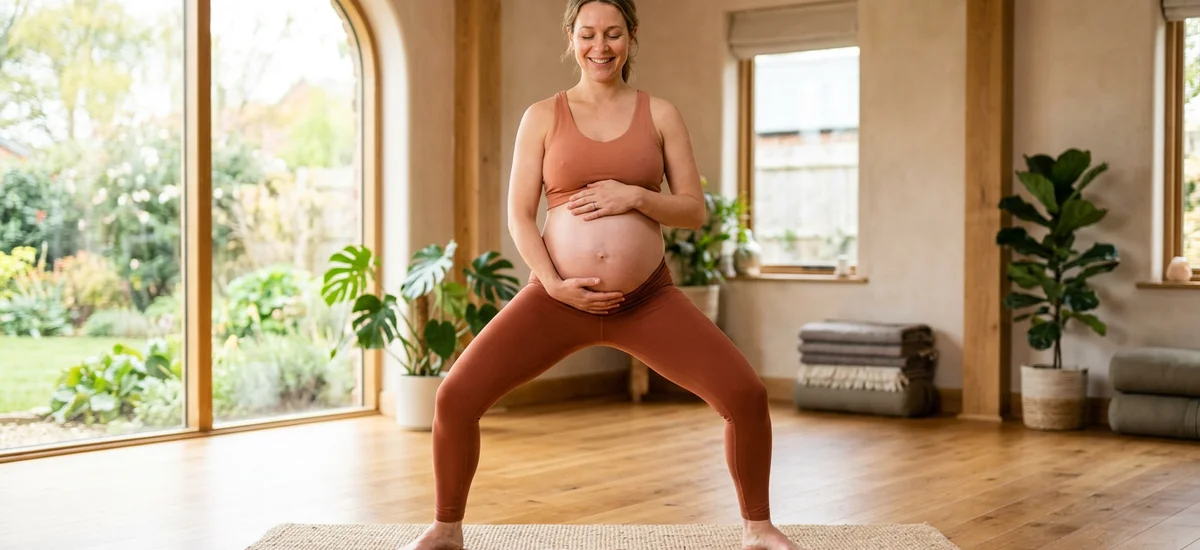
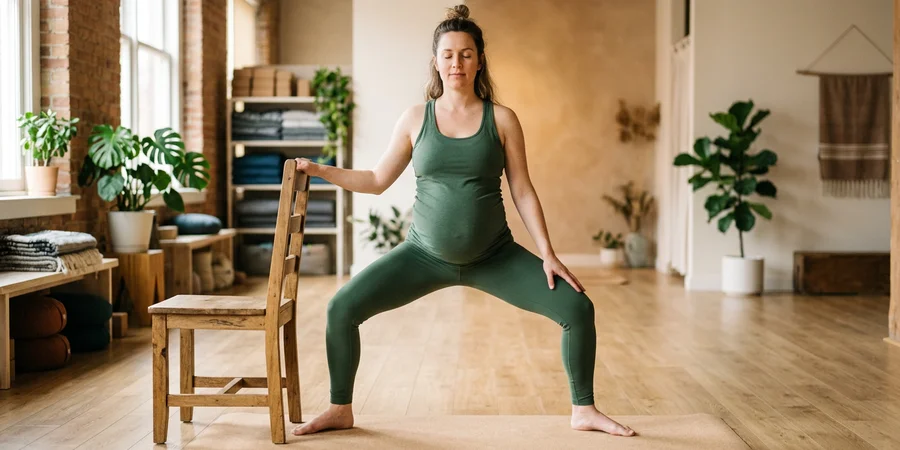
Standing with legs wide apart and knees bent outward, Goddess Pose strengthens the legs and opens the pelvis with a wide and stable base. It is a natural preparation for labor, as it trains hip opening in a vertical position.
If fatigue sets in, support yourself on the back of a chair or a wall. Stability is the priority, especially when the center of gravity has shifted. Breathe downward, toward the pelvic floor, and imagine your body rooting down.
Seated Butterfly (Baddha Konasana)
Sitting with the soles of the feet together and knees open to the sides, Baddha Konasana opens the hips and the inner thigh area without intense effort. It is one of the most comfortable poses for cultivating pelvic opening.
Elevate the pelvis on a cushion or a blanket so that the back remains upright effortlessly. Do not push the knees down: let gravity do the work. Take the opportunity to grow from the crown of the head and breathe deeply.
Child’s Pose with wide knees (Balasana)
This resting pose is adapted to pregnancy by opening the knees to leave space for the belly. Kneeling and letting the torso fall forward onto a bolster or several cushions, Child’s Pose decompresses the lower back and calms the nervous system.
It is a refuge to return to whenever you need to stop. The support of the torso allows you to release weight completely and truly rest. Stay as long as your body asks, breathing into the lower back.
Seated Side Stretches
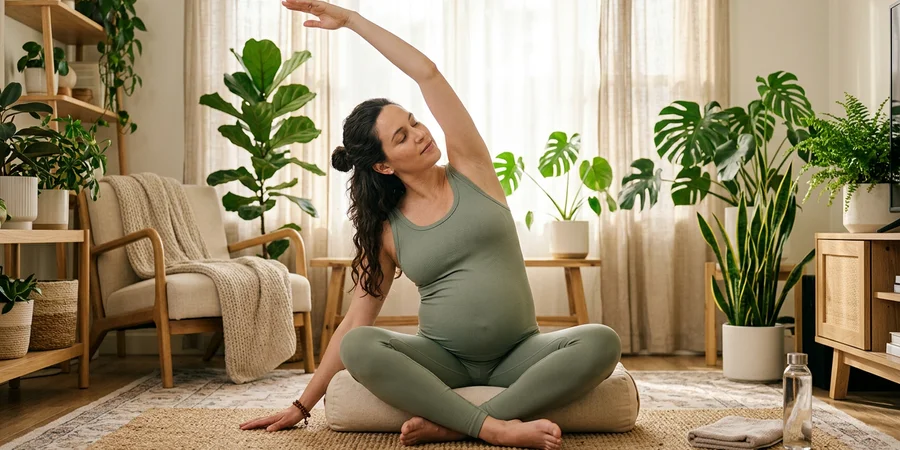
Sitting with legs crossed and the pelvis elevated, tilt the torso to one side, resting one hand on the floor and lengthening the opposite arm over the head. These side stretches create space between the ribs and the pelvis, an area that the baby tends to compress.
Relieving this shortening improves breathing and reduces the feeling of pressure under the ribs, common in the third trimester. Work both sides equally and keep the sit-bones well grounded.
Gentle Legs-Up-the-Wall (Viparita Karani)
With legs supported against a wall and the torso elevated with cushions so as not to be flat on the back, this gentle version of Viparita Karani promotes venous return and rests swollen legs. It is a huge relief when ankles and feet accumulate fluid.
Keep the torso slightly propped up to avoid compression of the vena cava. Combined with slow breathing, this posture aligns with the benefits of restorative yoga, which prioritizes deep rest and body recovery.
Breathing for pregnancy and labor
If there is one gift that yoga offers to motherhood, it is conscious breathing. Learning to breathe calmly regulates emotions, oxygenates the baby, and becomes an anchor during contractions. Unlike postures, your breath accompanies you at all times.
The foundation is slow abdominal breathing. Sitting comfortably or lying on your side, lead the breath toward the belly gently, without holding it, and slightly lengthen the exhalation. An exhalation longer than the inhalation activates the nervous system’s calm response and teaches the body to release tension.
That same capacity to let go is what comes into play during labor. When a contraction arrives, deep, long breathing helps relax the pelvic floor instead of tensing it, facilitating the process. Practicing it during pregnancy creates an automatic response that the body remembers at the key moment.
These techniques draw directly from the tradition of pranayama exercises, adapted for pregnancy: always gentle, without forced retentions, and without effort. In this stage, less is more, and the instruction is to breathe naturally and with full awareness.
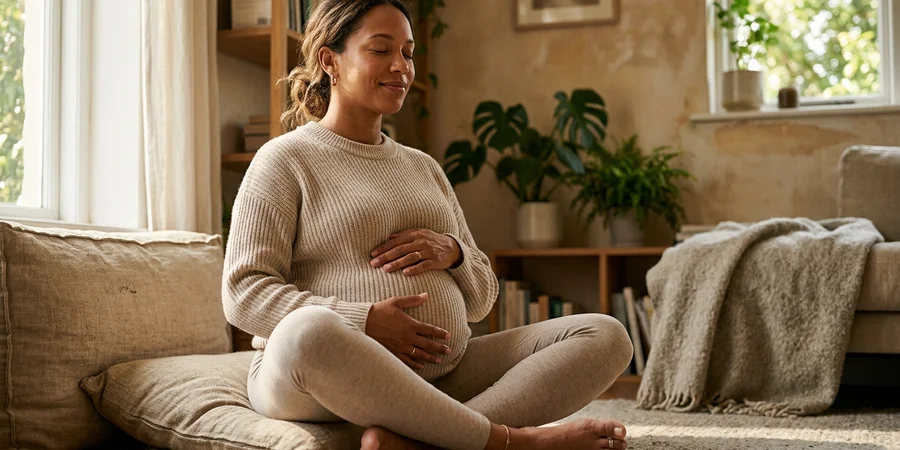
Always close your practice with a few minutes of stillness. Instead of lying on your back, rest on your left side with a cushion between your knees, a variant of Savasana designed for pregnancy. This final repose integrates the work and gifts you a moment of shared calm with your baby.
Practice with professional guidance
Prenatal yoga is safe and deeply beneficial, but every pregnancy is unique. Before starting or continuing your practice, it is advisable to consult with your midwife or gynecologist, especially if there is any particular condition or a high-risk pregnancy. Their judgment always comes first.
Whenever possible, attend classes with a teacher specialized in prenatal yoga. A trained eye adjusts the postures to your trimester, suggests appropriate supports, and helps you distinguish between a healthy stretching sensation and a warning signal. This accompaniment makes the difference.
Listening to the body is the central skill of this entire stage. If something doesn’t feel right, don’t force it; if you need to rest, rest. Pregnancy teaches a way of practicing that does not seek goals, but presence, and that lesson remains long after the birth.
If this stage has awakened in you the desire to go deeper and, perhaps, to accompany others on their path, exploring the world of yoga asanas is a natural first step. And for those who dream of dedicating themselves to teaching, the yoga teacher training course from Kavaalya offers comprehensive training online, with the solidity of tradition and the pedagogy that every body deserves.