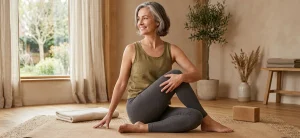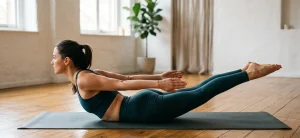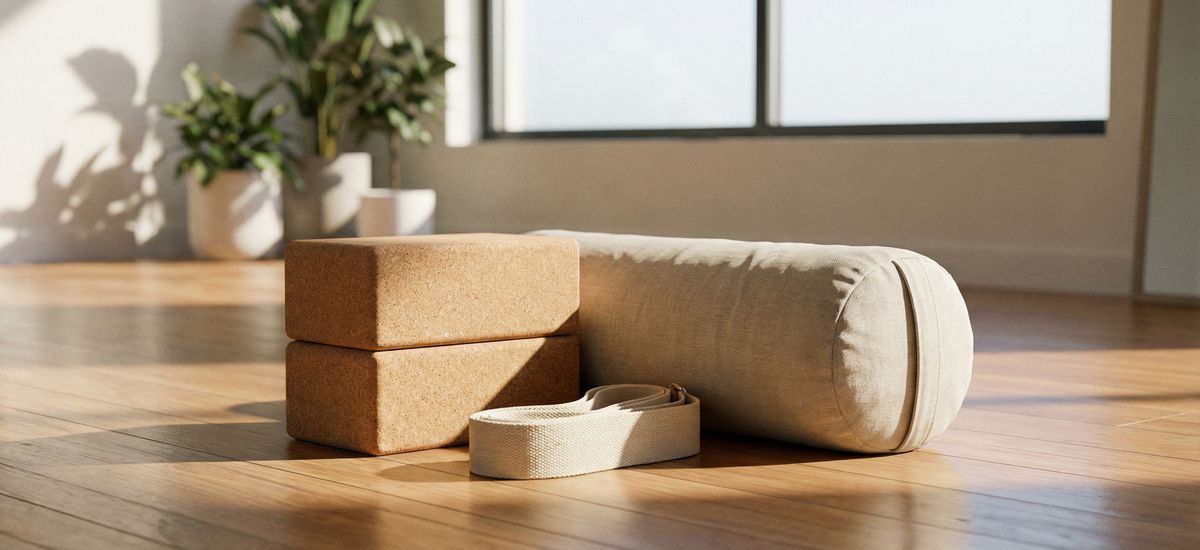
It is very likely that, upon entering a yoga studio for the first time, you saw a shelf full of colorful blocks, straps, and cylindrical cushions. And it is also likely that you thought: “that’s for those who lack flexibility” or “I don’t need help.” However, nothing could be further from the truth.
There is a widespread myth that says using yoga accessories (or props) is cheating or a sign of weakness. The truth is that the more advanced practitioners and experienced teachers are precisely the ones who use them the most. They are not crutches to hold you up, but smart tools designed to deepen your alignment, prevent injuries, and discover new sensations in poses you thought you knew.
In technical styles like Iyengar Yoga or passive styles like Yin Yoga, the material is a fundamental part of the session. In this guide, we will explore the three basic accessories that will transform your practice and how to make the most of them from day one.
The Yoga Block: Your Extension of Arms
The block or brick is undoubtedly the most versatile accessory that exists. Its main function is to “bring the floor up” toward your hands. Many times, in trying to touch the floor in a forward bend or in a standing pose, we sacrifice the straightness of the back or collapse the chest, losing all the benefits of the asana.
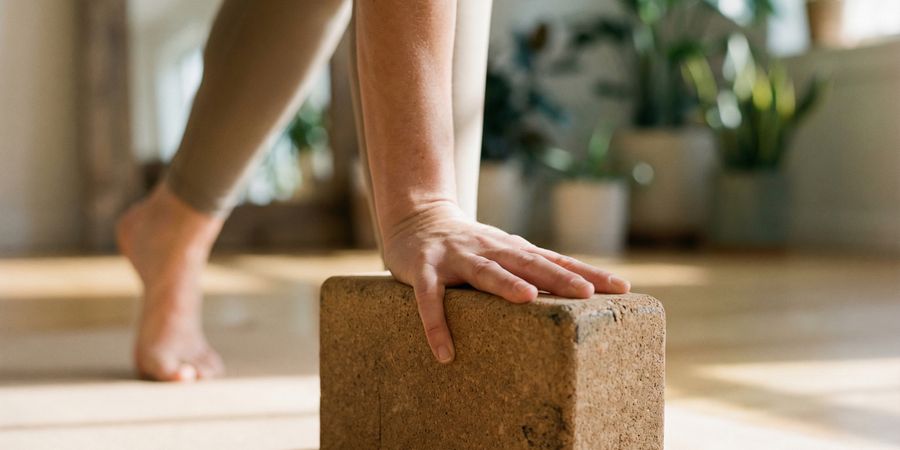
By placing one hand on a block, you gain that extra centimeters you need to keep the spine aligned and breathe freely. They are especially useful in balance poses like Ardha Chandrasana (Half Moon Pose), where stability is key. If you use a block under your supporting hand, you will be able to open your hip and chest with much more confidence and elegance. See here how to perform Ardha Chandrasana.
Regarding materials, you will find foam blocks (light and soft) or cork and wood (heavy and firm). For standing poses where you need to bear weight and feel stability, cork is the best option. Foam is preferable for seated poses or to place under the knees if you have sensitivity or discomfort when resting them on the floor.
The Yoga Belt: Gaining Extension
If blocks are extensions for your arms, the belt is the extension of your flexibility. It is common to feel frustration when, in a forward bend, our hands cannot reach the feet. The common mistake is to hunch the back and tense the shoulders to reach at all costs, creating unnecessary tension in the neck.
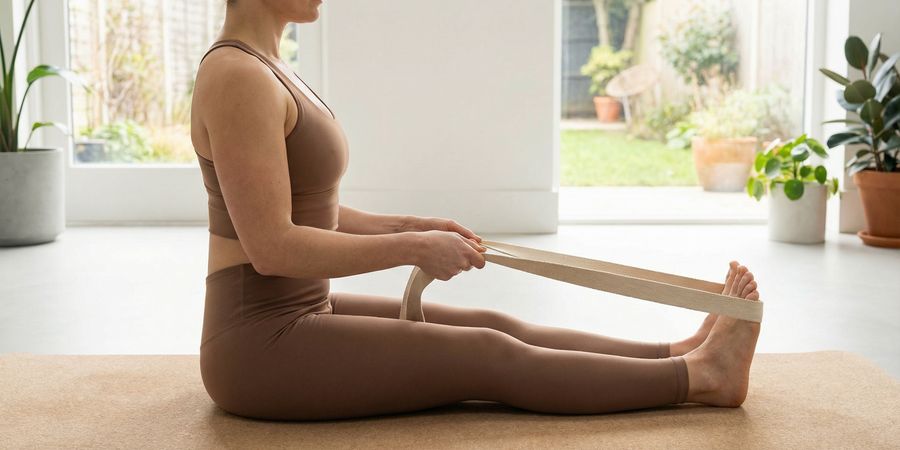
The belt acts as a bridge that connects your hands to your feet. By passing the strap around the soles of your feet, you can keep your back straight and your shoulders away from your ears, working the bend from the hips, where the movement should really occur. Gradually, you will be able to walk with your hands along the strap as your hamstrings lengthen.
It is also a fantastic tool for working on shoulder opening or for “tying” the arms in inverted postures and ensuring that the elbows do not open too far. Using the belt teaches you the correct direction of effort and allows you to stay in the posture longer while breathing calmly.
The Bolster: The Art of Deep Rest
The bolster is that long, firm cushion that looks like a giant pillow. It is the undisputed king of Restorative Yoga, a style focused on the complete relaxation of the nervous system. Unlike blocks or the belt, which are often used to activate and align, the bolster is used to let go and surrender.
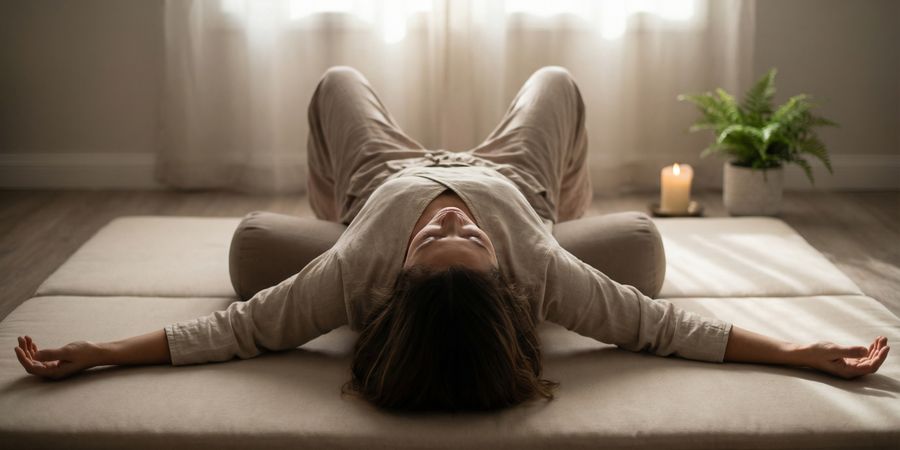
Its most delightful use is placing it along the spine to lie on your back over it. This position passively opens the chest, countering the closed posture we adopt while working in front of the computer. With full support, the body understands it is safe to relax, and the muscles release the accumulated tension without you having to exert any effort.
What do I need to get started at home?
You don’t need to buy the entire store catalog to start practicing safely in your living room. With a good non-slip mat, you have the base, but if you want to invest in a smart “starter kit,” we recommend prioritizing in order of usefulness:
- Two blocks: It’s better to have two identical ones for symmetrical poses or to use them at different heights.
- A belt: Any rigid fabric strap you have at home can work at first.
- Blankets: You can use the firm blankets from your sofa to substitute for the bolster or to elevate your hips in seated postures like Sukhasana.
Remember that yoga is a path of self-discovery and accessories are your allies on that journey. Using them does not make you less capable; on the contrary, it shows that you have the wisdom to listen to your body and provide exactly the support it needs to grow.