Have you ever found yourself wobbling on one leg in a yoga class? You are not alone. Balancing poses challenge us, but they also teach us. They invite us to pause, focus and connect with the present moment.
These asanas don’t just strengthen the body: they also cultivate patience, confidence and a calmer mind. Practising them is a reminder that balance is not static, it is built breath by breath. They are part of a wider group within our guide to yoga poses, and here we focus on the ones that work on stability.
Why practise balancing poses?
Balancing poses are much more than a physical exercise. They invite us to be truly present, to feel the body from within and to connect with the breath. When we look for stability on the mat, we also cultivate it in the mind. Balancing is a practice of mindfulness in motion.
On a physical level, these asanas strengthen the stabilising muscles, improve coordination and develop better body alignment. They work mainly the legs, abdomen, ankles and feet, creating a solid base from which to move with more confidence, both in yoga and in everyday life.
The most interesting part is what happens inside: cultivating balance is also cultivating patience, calm and mental clarity. When we fall and try again, we train emotional resilience. We learn to observe without judgement and to keep breathing in the middle of discomfort or frustration.
Tips to get started with balancing asanas
If you are a beginner, it is normal to find them challenging at first. It is not about not falling, but about learning to reconnect. Balance is not something you have, it is something you practise: every attempt is already part of the path.
A very useful trick is to fix your gaze on a stable point in front of you. This is called drishti and it helps enormously to keep your concentration. You can also practise near a wall or a chair to feel more secure while you build confidence.
Start with the most accessible poses and hold them for just a few breaths. Don’t get frustrated if you can’t hold an asana today: listen to your body and respect its timing. What matters is not how long you hold, but how you experience it while you are there. These poses combine very well with other standing asanas, which reinforce the same base of stability.
Balancing poses you can add to your practice
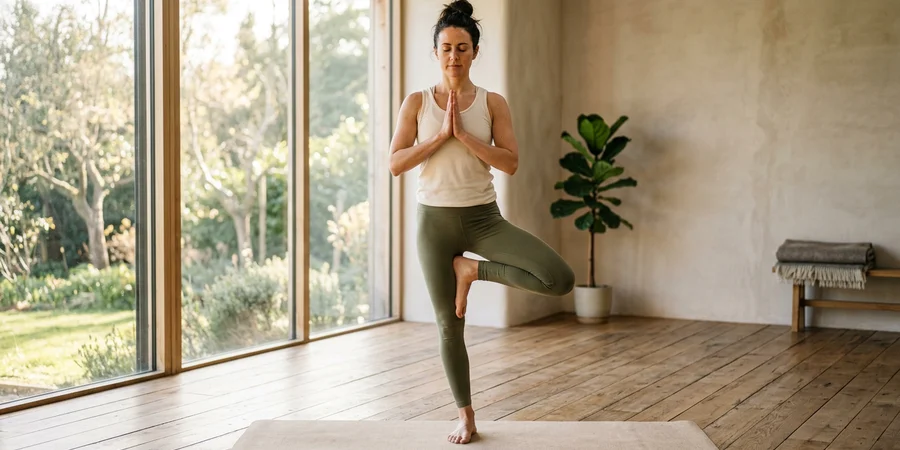
Vrikshasana, the tree pose
A classic, accessible pose, ideal for starting to work on stability. Press the sole of one foot against the inner thigh or calf of the opposite leg —never on the knee— and bring your hands to your heart or up to the sky.
It strengthens the legs and ankles, activates the core and improves mental focus. If you wobble, fix your drishti and spread the weight across the whole supporting foot. You have the full detail in the tree pose.
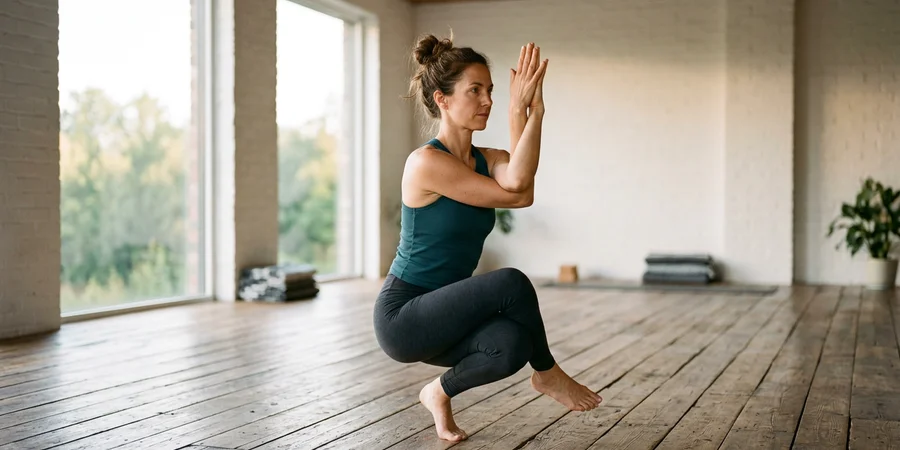
Garudasana, the eagle pose
A knot of arms and legs that challenges both body and mind. Cross one leg over the other and intertwine your arms in front of your chest, sinking your hips slightly as if you were sitting down.
It improves balance and coordination, and stretches the shoulders, upper back and hips. It is ideal for practising concentration while you hold the discomfort calmly. You can go deeper into Garudasana and its variations.
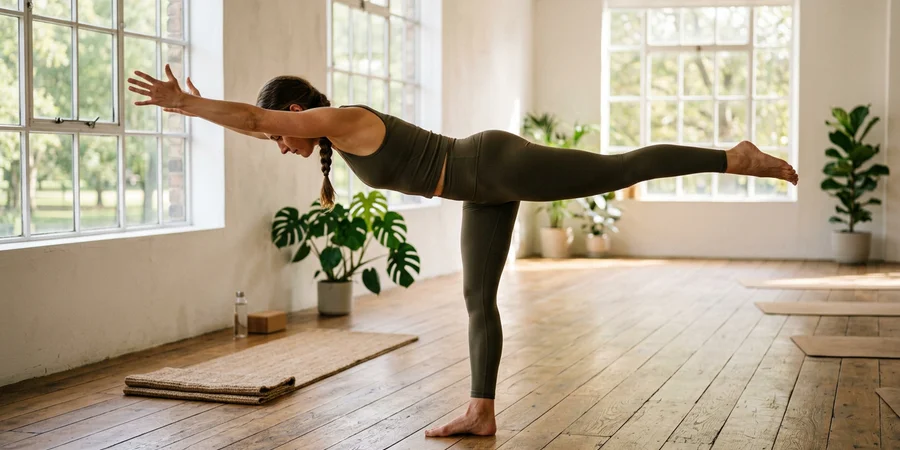
Virabhadrasana III, warrior three
A pose of strength and extension. From one firm leg, tilt your torso forward and lift the other leg until it forms a straight line parallel to the floor, from the heel to the head.
It works the legs, glutes and lower back while strengthening determination and focus. Bring your hands forward, to your hips or into prayer depending on your level, and keep your abdomen active so you don’t lose the line.
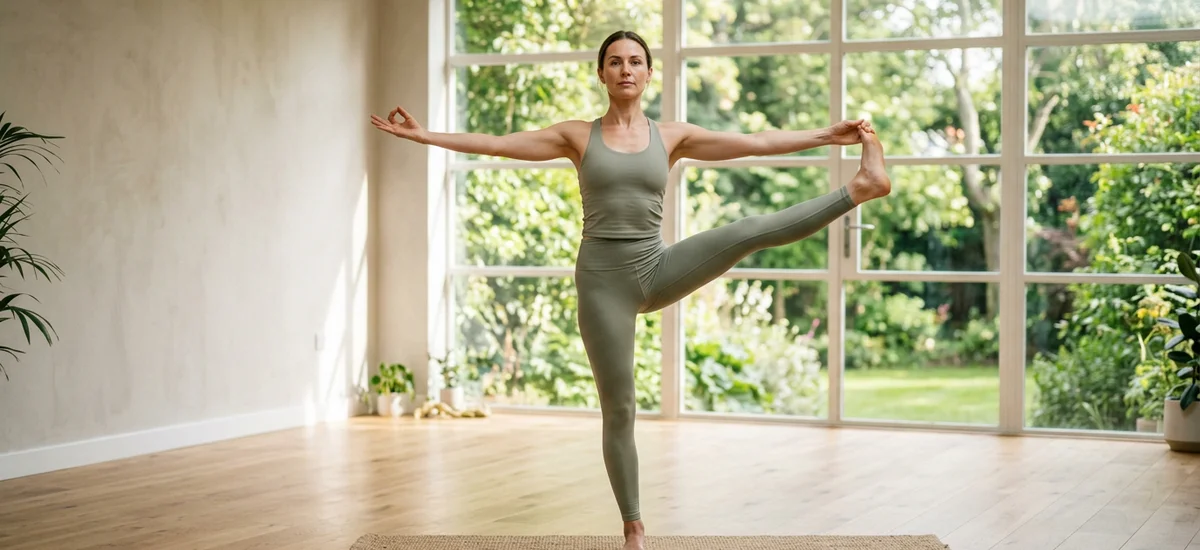
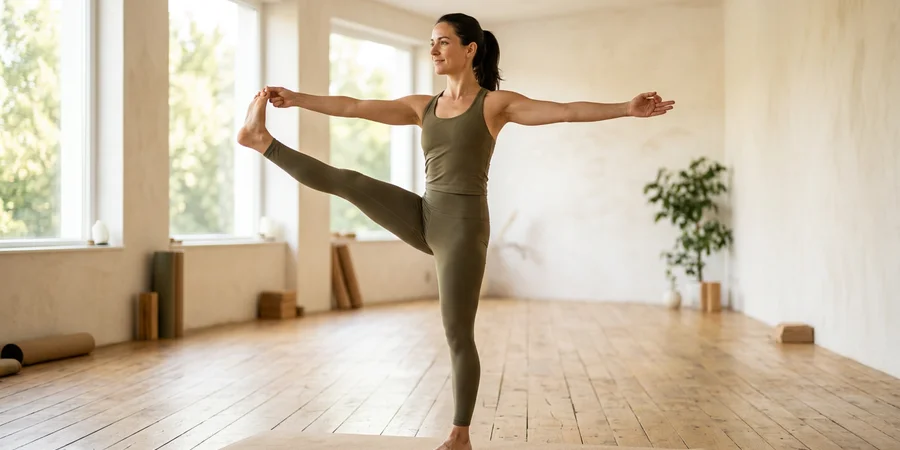
Utthita Hasta Padangusthasana, extended hand to big toe
It requires open hips and good core control. Hold your weight on one leg and extend the other forward or to the side, holding the big toe of your foot or using a strap if you can’t reach comfortably yet.
It improves balance and flexibility in the legs, and teaches you to stay calm in a demanding pose. Keep your chest open and your gaze fixed to gain stability.
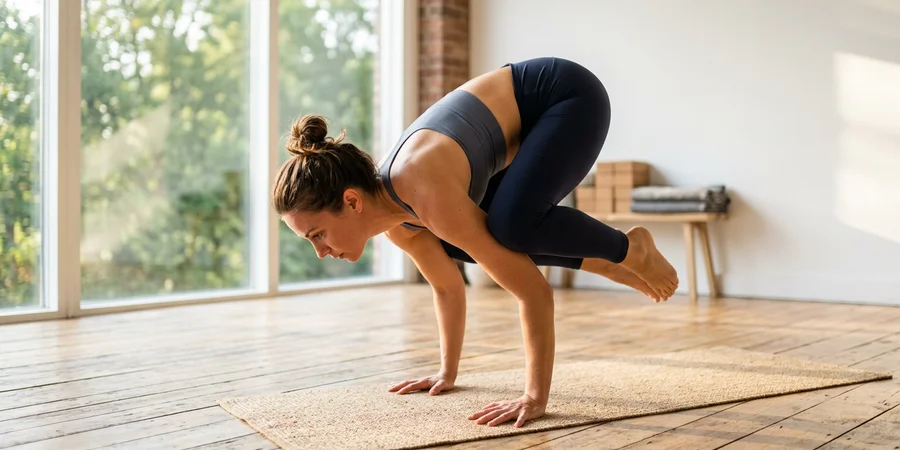
Bakasana, the crow pose
Here the balance shifts to the arms. Place your palms on the floor, spread your fingers and rest your knees on the upper part of your triceps while you tip your weight forward until your feet lift off.
It strengthens the wrists, shoulders and core, and teaches you to trust your centre. Start with your feet close to a blanket to lose the fear of falling. Discover the step by step of Bakasana, the crow pose.
Ardha Chandrasana, the half moon
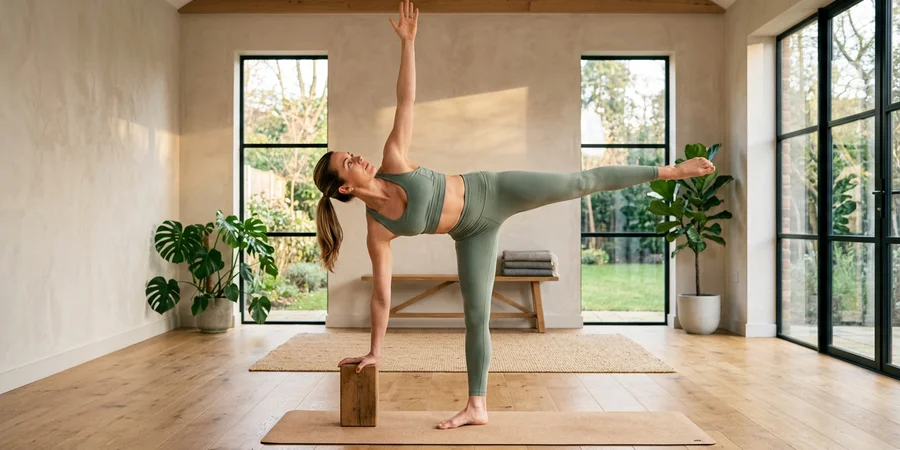
A lateral pose that demands openness and stability. With one hand resting on the floor or on a block and the other pointing to the sky, open your body to one side while you lift one leg parallel to the floor.
It improves coordination, strengthens the legs and expands the chest. Rotate your torso upward little by little and look towards your upper hand only when you feel stable. You have more keys in Ardha Chandrasana and its variations.
Frequently asked questions about balance in yoga
Why do I find balance in yoga so hard? It is completely normal. Balance depends on the strength of the stabilising muscles, on concentration and on the vestibular system, and all of that can be trained. If you wobble, it is not a failure: it is part of the process.
How can I improve my balance? Fix your gaze on a fixed point (drishti), spread the weight across the whole supporting foot, engage your abdomen and practise consistently. Leaning on a wall at the beginning speeds up your progress a lot.
What are the main balancing asanas? Some of the most practised are the tree pose (Vrikshasana), the eagle (Garudasana), warrior three (Virabhadrasana III), the half moon (Ardha Chandrasana) and, in arm balance, the crow (Bakasana).