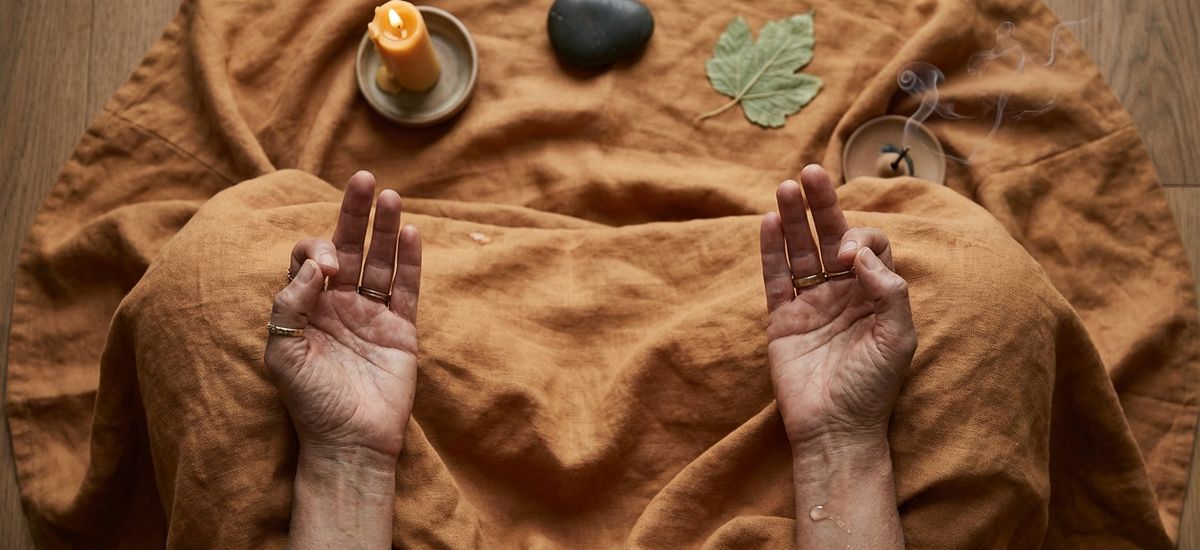
The hands have an incredible power. Through simple gestures, we can communicate, express emotions, and in yoga, channel energy. The mudras are specific positions of the fingers and hands that are used to balance body and mind, enhance concentration, and deepen meditation.
Since ancient times, yogis have used mudras as a subtle yet powerful tool to connect with the inner self.
Each mudra has a purpose: some calm the mind, others awaken energy or strengthen intuition. This guide will help you discover how to incorporate them into your daily practice and harness all their benefits.
What are mudras?
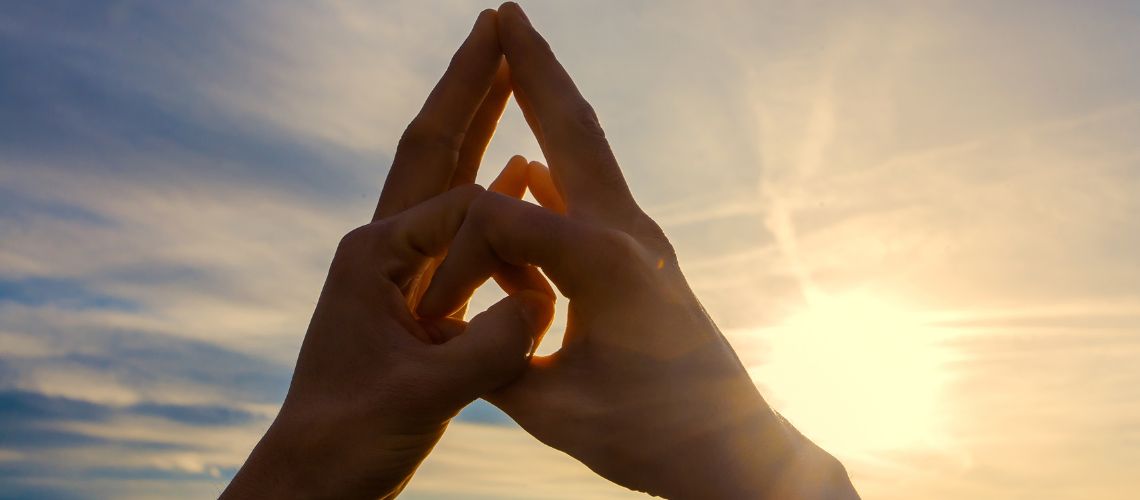
Mudras are gestures or positions of the hands that are used in yoga, meditation, and the spiritual tradition of India to channel and direct energy. The word mudra in Sanskrit means “seal” or “gesture”, and each one has a specific purpose, whether it is to calm the mind, increase concentration, or balance emotions.
According to the philosophy of yoga, the fingers of the hands are connected with the five elements: earth, water, fire, air, and ether. By joining them in different ways, we can influence our physical, mental, and energetic state, allowing energy to flow more harmoniously.
Although they may seem like simple movements at first glance, mudras have a profound impact on spiritual practice and everyday life. They are an accessible and powerful tool that anyone can use, whether in a meditation session, during pranayama, or even in moments of stress to regain balance.
The origin of mudras: an ancient tradition
The mudras have their roots in the ancient spiritual traditions of India and Buddhism. They are mentioned in sacred texts such as the Vedas and the Upanishads (pillars of the Yoga Sutras), where they are described as tools to channel energy and connect with the divine. Since then, they have been used in meditation, yoga, and healing practices, frequently combined with mantras.
They also appear in Hinduism and Buddhism, not only in spiritual practice but also in art and iconography. Many deities and sacred figures are depicted with specific hand positions, each with a symbolic meaning that reflects power, protection, or blessing.
Beyond India, the use of hand gestures to influence the mind and body has also been found in other ancient cultures, such as the Chinese and Egyptian. Today, mudras remain an essential tool in the practice of yoga and meditation, allowing practitioners to access states of calm, clarity, and energy with a simple finger movement. If you want to delve into the benefits of yoga, mudras are an excellent starting point.
When to practice mudras?
Mudras should be included in your yoga routines once a certain mastery of the asanas and pranayama has been achieved, and the major blockages to the circulation of prana have been eliminated.
Mudras and the five elements
The ancient yogic texts teach that the body is composed of five essential elements: fire, air, earth, water, and ether (or space). Each of these elements manifests in a finger of the hand, and through mudras, we can influence their balance to improve our health and well-being.
The connection between the fingers and the elements:
- Thumb → Fire 🔥 (Energy, digestion, transformation)
- Index → Air 💨 (Movement, thought, mental clarity)
- Heart → Sky (ether) ☁️ (Expansion, intuition, spiritual connection)
- Cancel → Earth 🌍 (Stability, strength, grounding)
- Pinky → Water 💧 (Fluidity, emotions, communication)
When these elements are unbalanced, the body and mind reflect this through symptoms such as stress, anxiety, fatigue, or physical illnesses. Mudras act as energy switches, helping to harmonize these elements when combined with asanas, pranayama, and meditation.
Beyond their physical impact, mudras also play a role in spiritual transformation. By practicing them with intention and awareness, we can unlock stagnant energy, enhance concentration, and facilitate states of deep calm and mental clarity. In practices such as Kundalini Yoga, mudras play a fundamental role in awakening dormant energy.
Types of Mudras and Their Purpose
In yoga and meditation, mudras can be classified according to their purpose, according to intentionality, the effect they generate on the mind and body, etc. Although there are hundreds of mudras, the main ones are as follows.
The 5 main groups are:
- Hasta: hand mudras
- Mana: head mudras
- Kaya: posture mudras
- Bandha: lock mudras
- Adhara: posture mudras
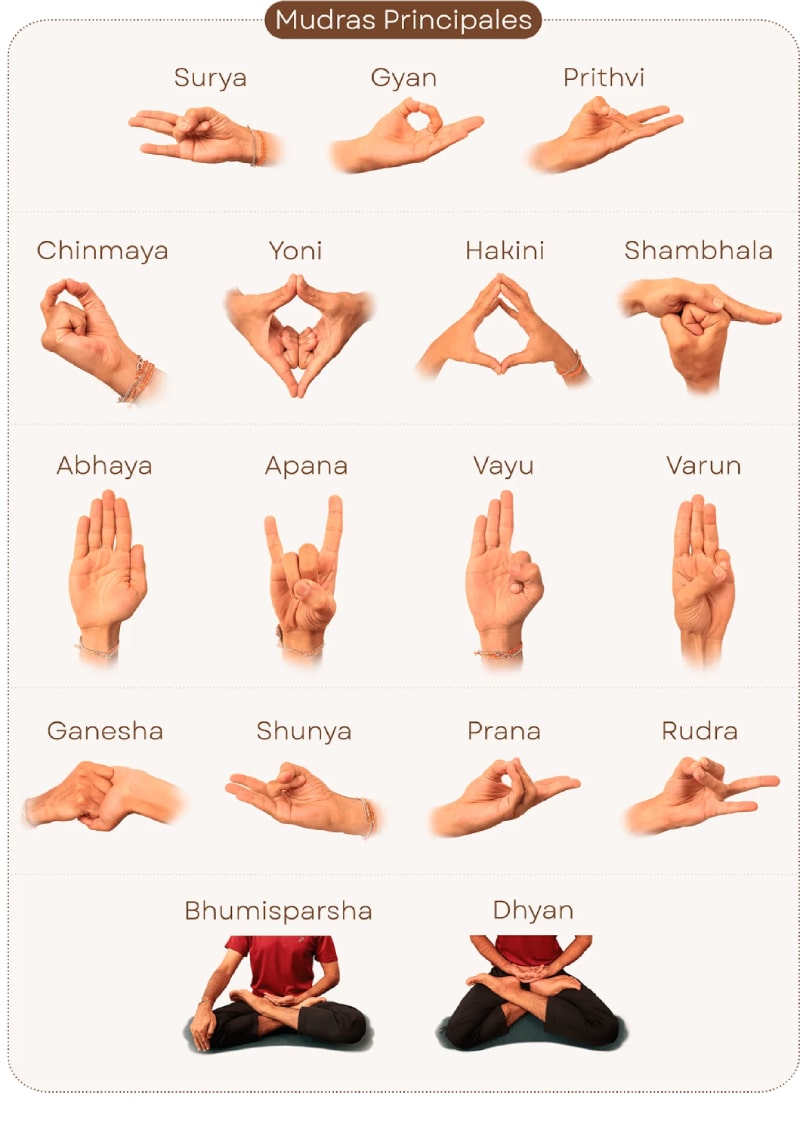
Gyan Mudra: The Gesture of Knowledge
In Sanskrit, Gyan means knowledge and wisdom. This is one of the most commonly used mudras in meditation, as it helps to sharpen the mind, improve concentration, and enhance mental clarity. It is believed to facilitate access to a deeper knowledge, both of oneself and the external world.
Gyan Mudra balances the elements of fire (thumb) and air (index), promoting the flow of mental energy and stimulating thought. Its regular practice helps to calm the mind, reduce stress and enhance memory, making it an ideal ally for meditation and learning.
How to practice it: Join the tip of the index finger with the tip of the thumb, forming a circle. Keep the other three fingers extended and relaxed. Place your hands on your knees with the palms facing up, promoting an attitude of receptivity and openness. You can practice it during meditation, conscious breathing, or in moments of introspection.
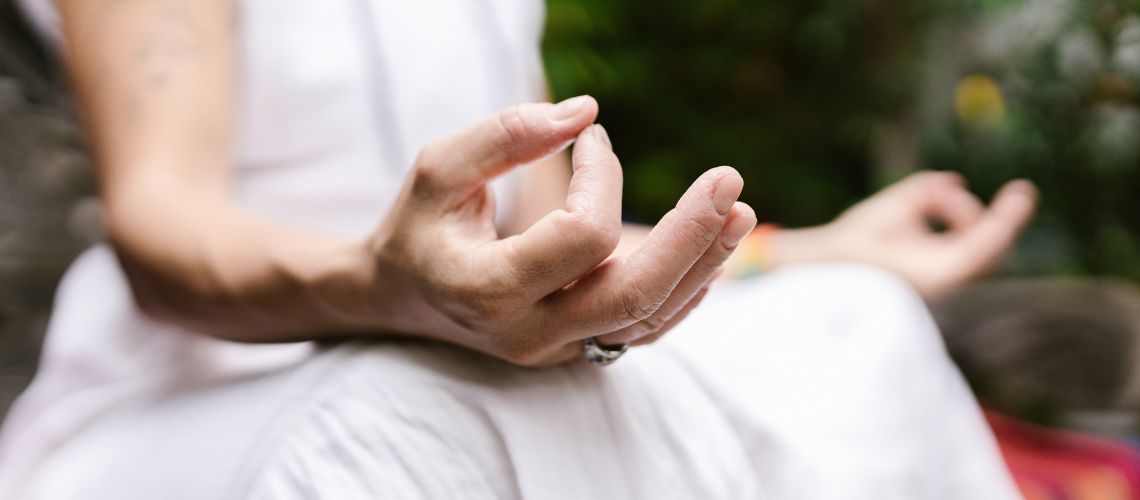
Prithvi Mudra: The Gesture of Stability and Strength
Prithvi Mudra is a hand mudra (Hasta Mudra) that works with the earth element (Prithvi in Sanskrit), symbolizing stability, growth, and inner strength. This gesture helps to ground energy, strengthen the body, and promote physical and mental balance. It is said that its regular practice enhances the connection with the earth, bringing a sense of security and vitality.
This mudra is ideal for strengthening bones, improving physical endurance, and increasing vital energy. It also helps in cases of fatigue, weakness of the immune system, and lack of concentration. On an emotional level, its practice brings confidence, calmness, and a sense of security, helping to counteract anxiety and fear.
How to practice it: Join the tip of the ring finger with the tip of the thumb, while the other three fingers remain extended and relaxed. Keep your hands on your knees with the palms facing up and breathe deeply. It is recommended to practice it in meditation or pranayama, especially when seeking strength and stability in times of uncertainty.
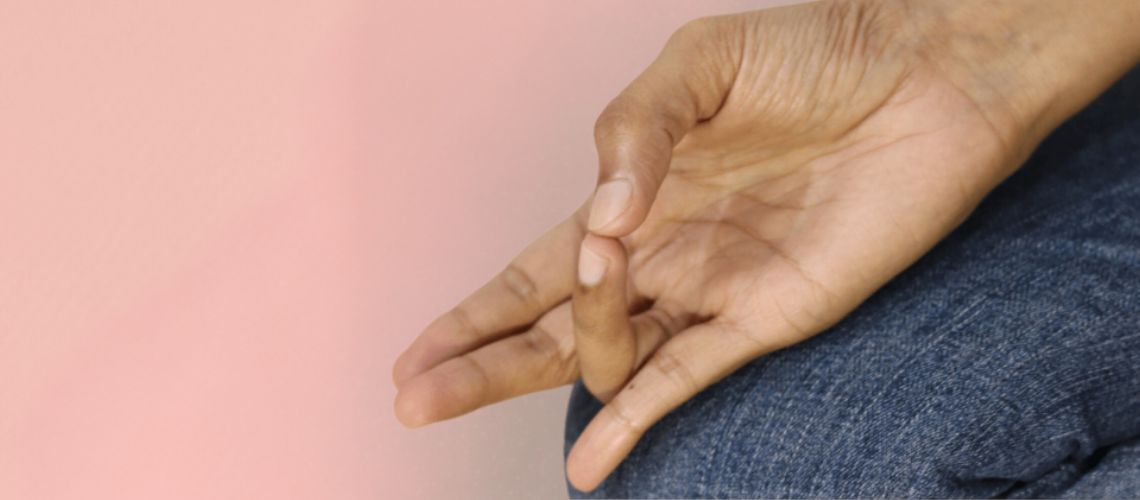
Surya Mudra: The gesture of fire and vitality
Surya Mudra is a hand gesture (Hasta Mudra) associated with the element of fire (Surya means “sun” in Sanskrit), representing energy, transformation, and internal heat. This mudra is ideal for activating metabolism, stimulating vitality, and generating body heat, making it recommended in cold climates or during times of low energy.
At a physical level, Surya Mudra helps to balance metabolism, facilitating digestion and promoting fat burning. It is also used to reduce lethargy and improve blood circulation. On the emotional and mental level, it enhances determination, willpower, and self-confidence.
How to practice it: Fold your ring finger towards the base of the thumb and gently press with the thumb on it. Keep the other three fingers extended and relaxed. Perform this mudra with your hands on your knees, palms up, and breathe deeply. It is recommended to practice it in the morning to enhance its energizing effect.
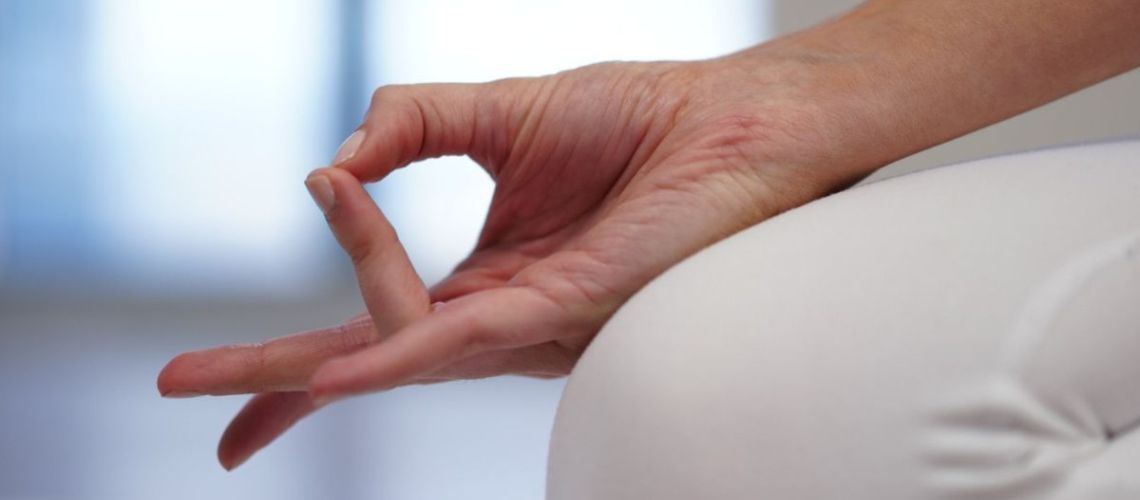
Prana Mudra: The Gesture of Vital Energy
In Sanskrit, Prana means vital breath, the energy that gives us life and connects us to the universe. Without prana, there is no movement or vitality in the body. Prana Mudra is one of the most powerful mudras, as it activates, purifies, and balances the vital force, helping to unblock stagnant energies and increasing our sense of vitality.
When breathing is shallow or uncontrolled, the flow of prana is affected, causing fatigue, lack of motivation, and physical and emotional imbalances. Practicing this mudra along with pranayama and meditation improves energy circulation, generating a sense of clarity, vigor, and well-being.
How to practice it: Touch the tip of the thumb with the tips of the little finger and the ring finger, while the middle finger and index finger remain straight. This gesture creates an energy circuit that helps to regulate and direct the prana in the body. It is recommended to practice it with mindful breathing to enhance its revitalizing effect.
Apana Mudra: The gesture of purification and elimination
Apana Mudra is a hand mudra (Hasta Mudra) that activates the energy of elimination and purification in the body. Apana in Sanskrit refers to the downward flow of prana, responsible for the elimination of toxins and physical, emotional, and energetic waste. Its practice helps to improve digestion, detoxification, and the release of negative energies.
At a physical level, this mudra is especially beneficial for the digestive, urinary, and reproductive systems, helping to regulate digestion, alleviate constipation, and balance the menstrual cycle. On the mental and emotional level, Apana Mudra allows the release of tensions, anxiety, and negative thoughts, promoting a sense of internal cleanliness and wellbeing.
How to practice it: Join the tip of the thumb with the tips of the middle and ring fingers, while the index and little fingers remain extended. Place the hands on the knees, with the palms facing up, and breathe deeply. It is recommended to practice it in the morning or during moments of introspection and energetic cleansing.
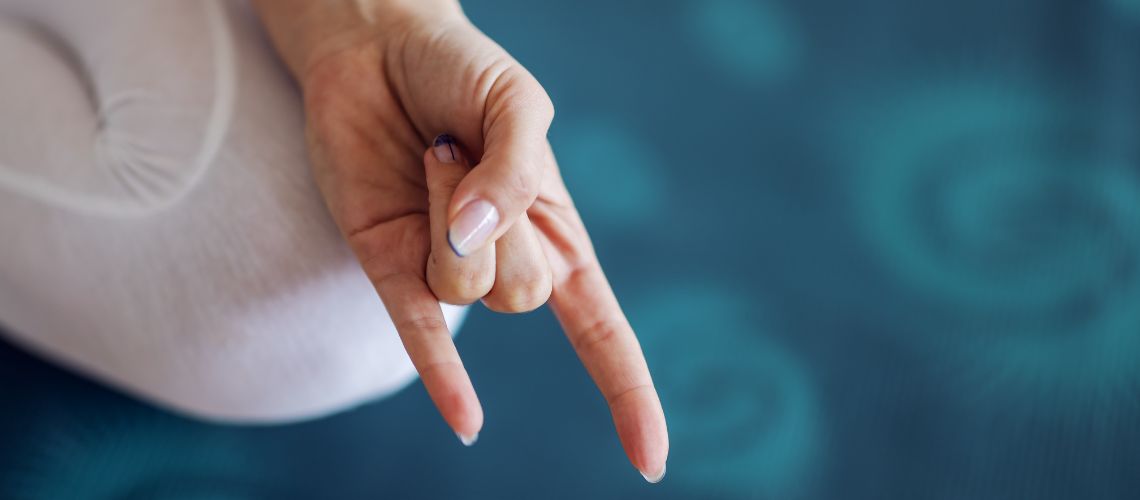
Dhyana Mudra: The Gesture of Deep Meditation
The Dhyana Mudra is one of the most representative mudras of meditation, commonly seen in statues and paintings of Buddha. Dhyana means concentration and deep meditation, and it is the seventh stage of Ashtanga Yoga, where the mind focuses without distraction. This mudra helps to achieve deeper states of introspection, promoting mental calm and inner peace.
This gesture symbolizes the balance between masculine energy (action, rationality) and feminine energy (intuition, receptivity) within us. Buddha used it in his meditation practices to achieve states of absolute serenity, making it a powerful symbol of enlightenment and harmony.
How to practice it: Rest the right hand on the palm of the left hand, both with palms facing up. The thumbs gently touch, forming a small triangle. Place the hands in the lap, maintaining a relaxed yet stable posture. This mudra is ideal for prolonged meditation in postures such as Padmasana or Sukhasana, helping to stabilize the mind and the flow of energy.
Vayu Mudra: The gesture of air balance
In Sanskrit, Vayu means air, and this mudra is designed to regulate and balance this element in the body. Although it resembles Gyan Mudra, its effect is completely different. Vayu Mudra is ideal for relieving physical discomfort related to air, such as bloating, gas, joint pain, and abdominal discomfort.
On a mental and emotional level, excess air can manifest as racing thoughts, anxiety, and overthinking. This mudra helps to calm the restless mind, providing a sense of peace and stability. It is also an excellent tool for improving sleep, as it relaxes the nervous system and facilitates deep rest.
How to practice it: Fold your index finger and gently press its tip against the base of your thumb, while the thumb exerts a slight pressure on it. Keep the other three fingers extended and relaxed. Avoid applying too much pressure; this mudra is designed to promote relaxation and balance, not tension.
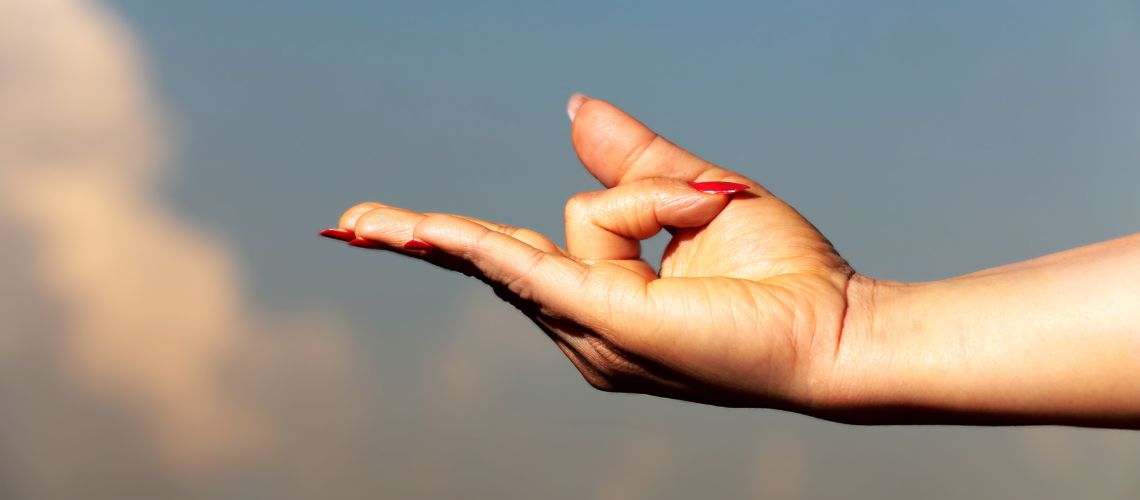
Rudra Mudra: The Gesture of Inner Power
The Rudra Mudra is associated with Shiva, the god of transformation and inner strength. Rudra means “lord” or “powerful” in Sanskrit, and this mudra activates the energy of the chakra of the solar plexus, the center of personal power and will. By balancing it, it helps us to strengthen our determination, mental clarity, and capacity for transformation.
This mudra stimulates the energy of fire (thumb), air (index), and earth (ring), helping to purify the body and mind. It is recommended to combat exhaustion, lack of motivation, and dizziness, as it revitalizes the body on an energetic level. It is also said to favor weight loss, as it activates the inner fire and stimulates metabolism.
How to practice it: Place the tip of the thumb over the tip of the index and ring fingers, forming a triangle. Keep the middle finger and little finger extended and relaxed. You can do this while sitting in a meditation posture or anytime you need to boost your energy and mental focus.
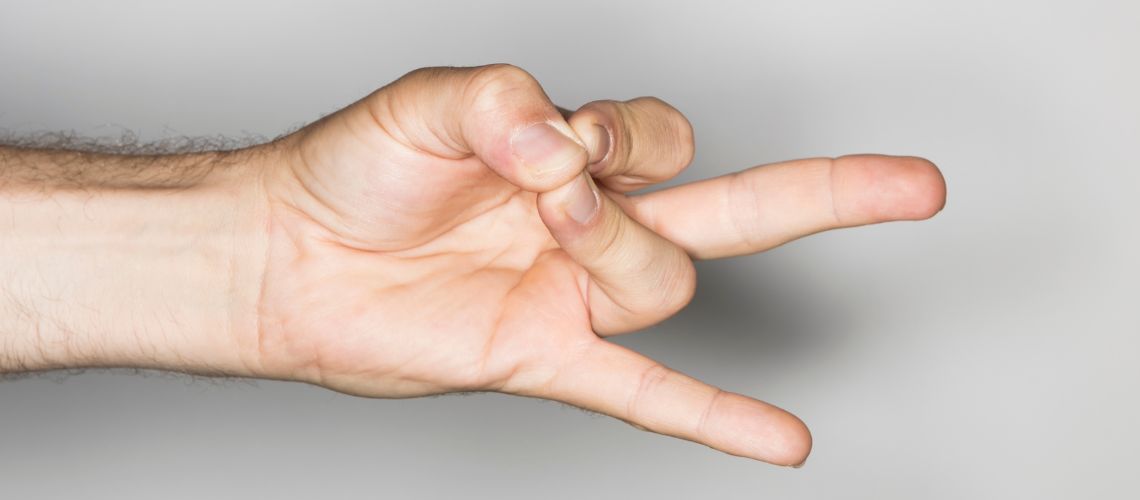
Other Mudras and Their Meaning
- Chinmaya Mudra: Represents fullness and inner wisdom. It helps to improve concentration and connect with the energy of meditation.
- Yoni Mudra: Symbolizes the womb and creative energy. It is used for introspection and emotional balance, promoting a sense of calm and renewal.
- Hakini Mudra: Stimulates the connection between the brain hemispheres, enhancing memory, concentration, and mental clarity.
- Shambhala Mudra: Associated with protection and inner peace, it helps to balance emotions and generate mental stability.
- Abhaya Mudra: Known as the gesture of courage and protection, it symbolizes the absence of fear and self-confidence.
- Varun Mudra: Represents the water element and emotional fluidity. It improves body hydration and promotes clear and effective communication.
- Ganesha Mudra: Inspired by the god Ganesha, this mudra helps to remove obstacles, strengthen willpower, and open up to new opportunities.
- Shunya Mudra: Relates to the element of ether and is used to alleviate hearing problems, enhance sensory perception, and calm the mind.
- Bhumisparsha Mudra: Symbolizes the connection with the earth and spiritual awakening. It is a gesture traditionally associated with the enlightenment of Buddha. Learn more about the meaning of Buddha’s hand postures.
- Dhyan Mudra: Also called the meditation mudra, it promotes deep concentration and balance between the mind and spirit.
Explanatory videos about mudras
Each mudra has a specific purpose, from balancing emotions to enhancing concentration. In these videos, we show you how to perform mudras such as Kechari, Gyan, Vayu, and Yoni, explaining their benefits and the correct way to practice them. Perfect for deepening your body-mind connection and taking your practice to the next level.
Benefits of Mudras: The Power of Energetic Gestures
Mudras are not just simple gestures with the hands or body; they are powerful tools that can influence the flow of energy (prana) in our body. Through their consistent practice, mudras can provide physical, mental, emotional, and spiritual benefits, helping to balance the body and mind.
- They balance the five elements of the body: Each finger of the hand is connected to an essential element (earth, water, fire, air, and ether). Practicing mudras helps to harmonize these elements, regulating energy and preventing imbalances that can affect our physical and mental health.
- They improve concentration and mental clarity: Mudras such as Gyan Mudra or Shambhavi Mudra strengthen attention and memory, helping to reduce mental distraction and increasing the ability to concentrate in meditation or daily activities.
- They relax the nervous system and reduce stress: Mudras like Hridaya Mudra or Vayu Mudra activate the parasympathetic system, which helps to calm anxiety, reduce stress, and improve emotional state. They are excellent allies in the practice of mindfulness and relaxation.
- Enhance vital energy and physical well-being: Mudras such as Prana Mudra or Rudra Mudra stimulate the flow of prana, helping to increase vitality, improve circulation, and balance metabolism. They can also alleviate physical discomforts such as fatigue, muscle tension, or digestive issues.
- They promote emotional healing and the opening of the heart: Mudras like Hridaya Mudra or Dhyana Mudra work on an energetic level to unblock repressed emotions, helping to release fear, pain, and sadness. They foster compassion, self-love, and emotional healing.
- Awaken spiritual energy and intuition: Some mudras such as Khechari Mudra or Shambhavi Mudra stimulate the Ajna chakra (third eye) and activate the pineal gland, facilitating the connection with higher states of consciousness. They are ideal for those seeking to deepen their meditation and introspection.
Mudras may seem simple, but their consistent practice has a profound impact on the mind, body, and spirit. They require no equipment or prior experience, making them accessible for anyone seeking balance, calm, and well-being in their daily life.
How long should I hold a mudra? Practical duration guide
One of the most frequently asked questions among those starting to practice mudras is: how long should I hold them? The answer depends on your experience, the type of mudra, and the objective you aim for.
Recommended Duration by Level
- Beginners: Start with 3-5 minutes per mudra. It’s better to be consistent than to force long sessions.
- Intermediate level: You can hold each mudra for 10-15 minutes. Here you will start to notice deeper effects.
- Advanced practitioners: Sessions of 30-45 minutes or even longer, especially during prolonged meditations or retreats.
Best times of the day to practice
- In the morning (Brahma Muhurta): Between 4:00 and 6:00 AM is the most auspicious time according to yogic tradition. The mind is calm and receptive.
- At sunset: Ideal for calming mudras like Vayu Mudra or Dhyana Mudra, which prepare the body for rest.
- Before sleeping: Relaxing mudras can improve sleep quality. Avoid energizing mudras like Prana Mudra or Surya Mudra.
- During the day: You can practice mudras discreetly at work, on transportation, or any moment of waiting.
Mudra Combinations: Effective Sequences
Mudras can be practiced alone or in strategic combinations to enhance their effects. Here are some proven sequences:
Morning Sequence (Activation)
- Prana Mudra (5 min) → Awakens vital energy
- Surya Mudra (5 min) → Activates metabolism
- Gyan Mudra (10 min) → Prepares the mind for the day
Evening Sequence (Relaxation)
- Apana Mudra (5 min) → Releases accumulated tensions
- Vayu Mudra (5 min) → Calms the nervous system
- Dhyana Mudra (10 min) → Induces deep peace
Sequence for Stress and Anxiety
- Prithvi Mudra (5 min) → Grounds and Stabilizes
- Vayu Mudra (5 min) → Reduces racing thoughts
- Gyan Mudra (10 min) → Provides clarity and calm
Sequence for concentration and study
- Hakini Mudra (3 min) → Connects both cerebral hemispheres
- Gyan Mudra (10 min) → Enhances memory and learning
- Rudra Mudra (5 min) → Increases determination
Common mistakes when practicing mudras (and how to avoid them)
Although mudras are simple techniques, it’s easy to fall into mistakes that reduce their effectiveness or even cause discomfort. Here are the most common ones:
1. Applying too much pressure
Mudras should be performed with a gentle and mindful touch. Pressing the fingers too hard causes muscle tension and blocks the flow of energy instead of facilitating it.
Solution: The fingertips should barely touch, as if holding a feather. The sensation should be of connection, not pressure.
2. Forgetting about breathing
Many practitioners focus so much on the position of their fingers that they forget to breathe consciously. Mudras reach their full potential when combined with pranayama.
Solution: Maintain a deep and rhythmic breath. Inhale and exhale through the nose, feeling how the air flows along with the energy of the mudra.
3. Practicing without intention
Doing mudras mechanically while thinking of other things dramatically reduces their effectiveness. Mudras are gestures of awareness.
Solution: Before starting, set a clear intention. What are you seeking with this practice? Calm, energy, clarity… Keep that intention in mind.
4. Confusing similar mudras
Some mudras look visually similar but have completely different effects. For example, Gyan Mudra and Vayu Mudra involve the index finger and thumb, but the position is different.
Solution: Study each mudra well before practicing it. In Gyan Mudra, the tips touch; in Vayu Mudra, the index is bent under the thumb.
5. Expect immediate results
The benefits of mudras are subtle and cumulative. You will not feel drastic transformations in the first session.
Solution: Practice with patience for at least 21 consecutive days before evaluating the results. Deep changes require consistency.
6. Ignoring contraindications
Some mudras have specific precautions. For example, Surya Mudra is not recommended if you have a fever or hypertension, as it increases body heat.
Solution: Always read the instructions for each mudra and listen to your body. If you feel discomfort, gently release the mudra.
Frequently Asked Questions about Mudras (FAQ)
Do mudras really work or are they just symbolic?
Mudras have both a traditional energetic component and a physiological basis. Neuroscience has shown that the nerve endings in the fingers are connected to different areas of the brain. By stimulating these areas, mudras can influence the nervous system, emotional state, and thought patterns. They are not magic, but they are not just symbols either.
Can I practice mudras if I don’t do yoga or meditate?
Yes, absolutely. Mudras are independent tools that you can use at any time: while working, watching television, traveling on public transport, or before sleeping. While they are more powerful when combined with meditation and pranayama, they work on their own.
Can I practice several mudras at the same time with different hands?
Yes, it is possible. Some advanced practitioners combine different mudras in each hand to work on multiple elements simultaneously. However, if you are a beginner, it is better to master one mudra at a time before experimenting with combinations.
Does it matter which hand I use for mudras?
Most Hasta Mudras (hand mudras) are practiced with both hands simultaneously. In tradition, the right hand represents solar energy (active, masculine) and the left the lunar (receptive, feminine). By using both, you balance the two energies.
Can I practice mudras while lying down?
Yes, especially relaxing mudras like Dhyana Mudra or Vayu Mudra. It is an excellent practice before sleeping or during Yoga Nidra. However, for energizing mudras like Surya Mudra or Prana Mudra, it is better to be seated to avoid overstimulation before sleep.
Do mudras have side effects?
In general, mudras are safe for everyone. However, some very sensitive individuals may experience unusual sensations at first: tingling, warmth, cold, or intense emotions. This is normal and usually indicates that energy is flowing. If the sensation is uncomfortable, simply release the mudra and rest.
Can I invent my own mudras?
Traditional mudras have been refined over thousands of years by yogis and teachers. Before experimenting, it is advisable to master classic mudras and understand how the elements and energy connections work. Once you have that foundation, you can explore with greater awareness.
Can children practice mudras?
Yes, mudras are safe for children and can help them develop concentration and calmness. Simple mudras like Gyan Mudra or Dhyana Mudra are ideal for introducing them to the practice. Sessions should be short (2-5 minutes) and presented in a playful manner.